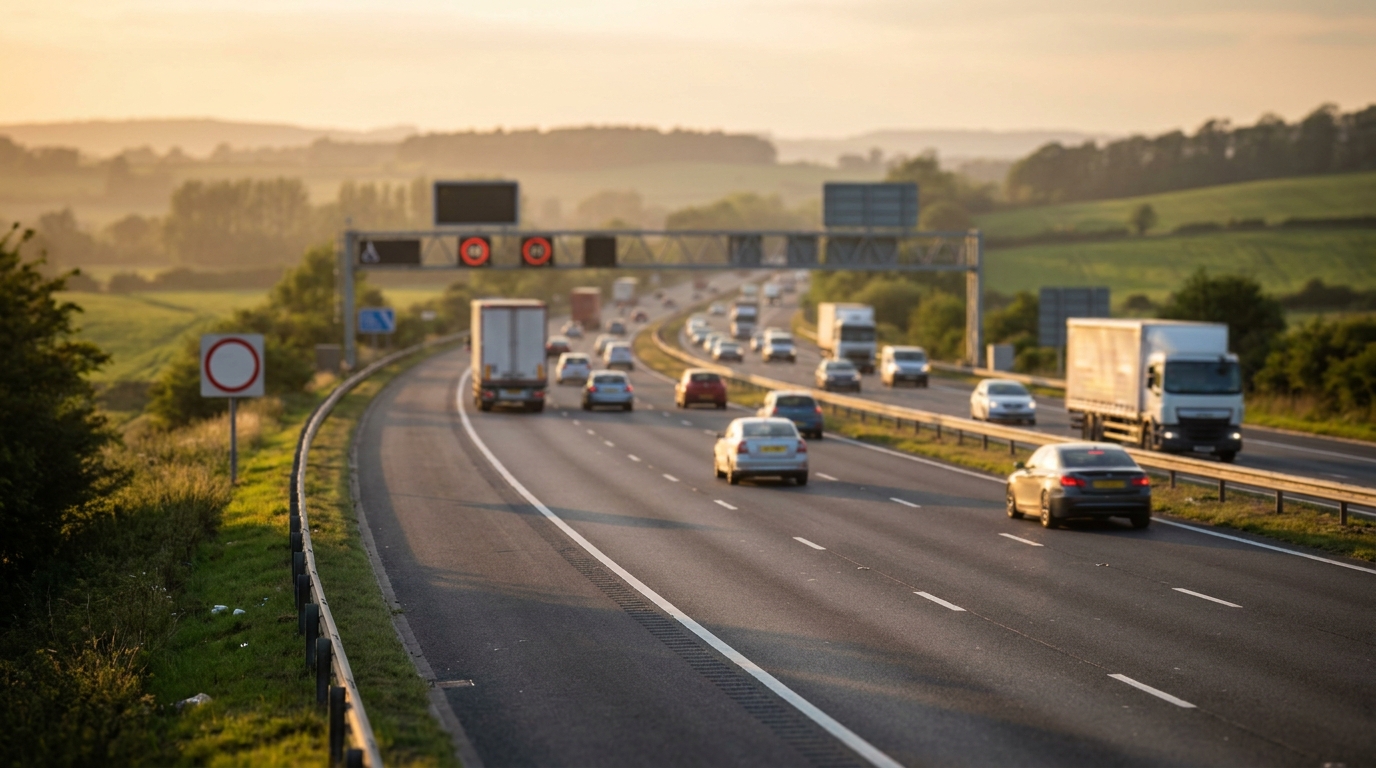
Every few months the question comes back around: would dropping your motorway speed really save meaningful money? The Department for Transport's older Ecodriving work, the AA and the RAC have all pointed in the same direction — yes, but by less than the internet claims. With average UK pump prices hovering near 135p a litre for petrol and 143p for diesel according to recent DESNZ weekly road fuel figures, the maths is worth doing properly rather than trusting a viral clip.
Why speed hurts fuel economy
Above roughly 50mph, aerodynamic drag becomes the dominant force a car has to overcome, and drag rises with the square of speed. Push the car 15% faster and you are asking the engine for around 30% more power just to hold the cruise, before you factor in the extra heat and friction losses at higher revs.
That is why motorway MPG falls off a cliff even though the road itself is the most efficient environment for an engine. The Department for Transport's historic Ecodriving trials and independent tests by What Car? and Honest John have repeatedly shown modern petrol and diesel cars are most efficient somewhere between 50 and 60mph in top gear, not at the 70mph limit.
What the numbers look like in litres and pounds
Take a fairly typical UK family car returning 50 MPG at a steady 70mph. Dropping to 60mph tends to add roughly 15% to that figure, taking it to around 57–58 MPG. Dropping further to 56mph — the speed HGVs are limited to and often quoted as the sweet spot — pushes many cars into the low 60s MPG.
On a 200-mile motorway run at 143p a litre diesel, that is the difference between roughly £26 of fuel at 70mph and about £22 at 60mph. Not transformative on a single trip, but for a 12,000-mile-a-year driver who spends half their miles on the motorway, it compounds to £120–£150 a year without buying a thing.
The catch is time. Ten miles per hour slower over 100 motorway miles costs you roughly 14 extra minutes. Whether that trade is worth it depends entirely on the journey — commuting daily is different from a one-off 300-mile drive to see family.
Where the savings shrink or grow
The gains are largest for tall, boxy vehicles: SUVs, vans, estates with roof boxes and anything towing. Drag scales with frontal area, so a Transit-shaped van at 70mph is working far harder than a low saloon. Van drivers and caravanners typically see the biggest percentage improvement from easing off.
Modern hybrids behave differently. Their advantage largely disappears at steady motorway speeds because the electric motor cannot help much once the battery is depleted and the engine is doing all the work. A Toyota hybrid that returns 60+ MPG around town may only manage 50 MPG at 70mph, and it still benefits from slowing down.
Practical rules for UK drivers
You do not need to crawl at 56mph in lane one to see a benefit. Most of the saving comes from the first 5–10mph you drop. Setting cruise at 65mph rather than an indicated 75mph is usually the sweet spot between fuel, time and staying out of other drivers' way.
Before blaming your right foot, check the basics. DVSA reminds drivers that under-inflated tyres, roof bars left on after summer and a boot full of forgotten gear can each cost 2–5% in fuel economy. Fix those first and the speed question becomes a fine-tune rather than the main event.
The takeaway
Dropping from 70 to 60mph on the motorway saves a realistic 10–15% on fuel for most UK cars, worth roughly £100–£200 a year for an average motorway commuter at current DESNZ pump prices. The trade is time, not safety, and the biggest gains go to vans, SUVs and anything towing. Slowing down is not a silver bullet — but combined with correct tyre pressures and losing unused roof bars, it is the closest thing to free money on the motorway.
