The under-$30k sedan segment is one of the quietest good-value corners of the US car market in 2026. Five hybrids in this range beat 45 MPG combined on EPA cycles — and the real-world numbers from owner reporting services generally come in within 3 to 5 MPG of sticker.
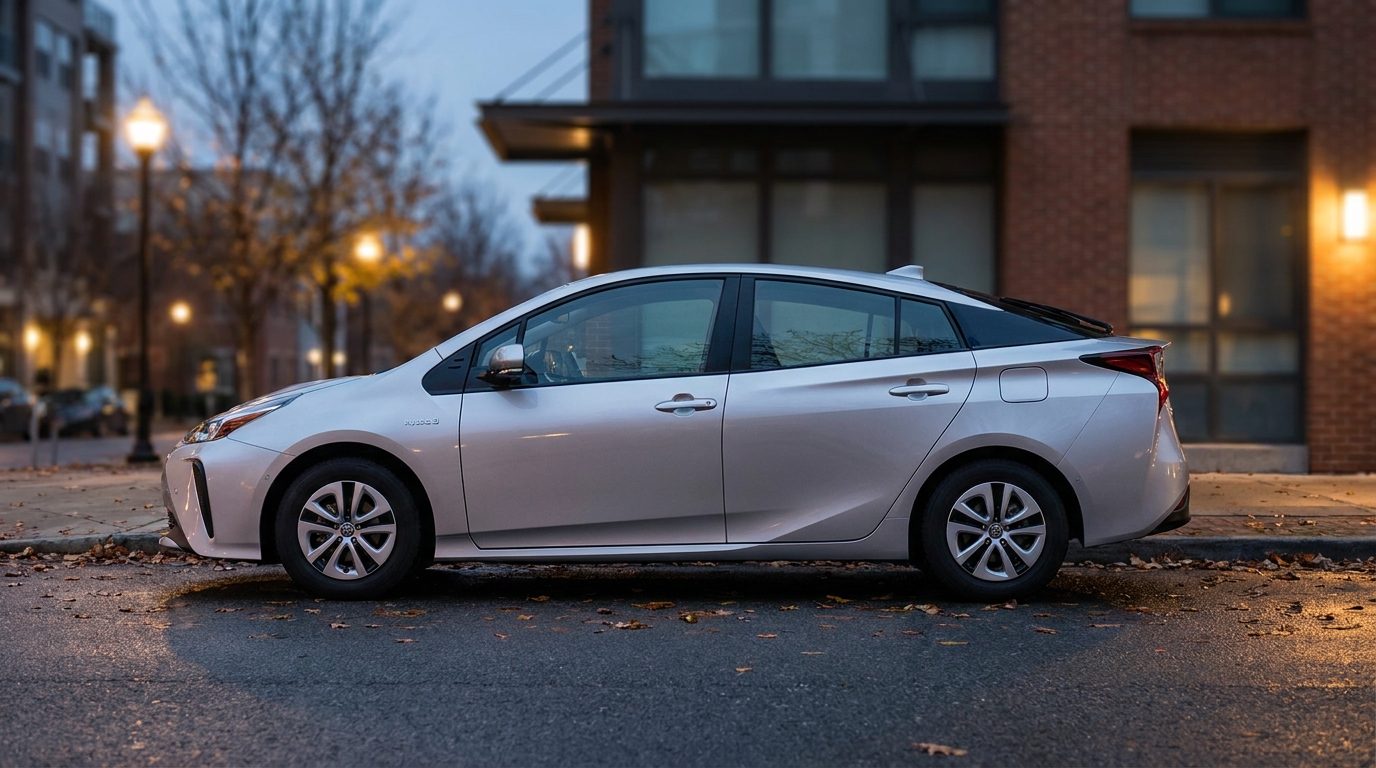
Toyota Prius — 57 MPG combined, from $29,100
Completely redesigned for 2023 and carrying those bones into the 2026 model year, the current Prius is sharper-looking and faster than any Prius in history, while still getting 57 mpg combined. Real-world owner data (Fuelly, Edmunds long-term) averages 54 to 58 MPG — within 2 MPG of sticker.
The downside is a tight back seat and cargo area. If you rarely carry four adults, it's the fuel-economy king of the segment. Toyota's hybrid reliability record is also best-in-class.
Hyundai Elantra Hybrid — 54 MPG combined, from $26,200
A more conventional four-door that trades a few MPG for a more traditional sedan cabin and trunk. The Elantra Hybrid consistently comes in at 48 to 54 real-world MPG, with a 10-year/100,000-mile powertrain warranty that's unusual at this price.
Hyundai's hybrid system is simpler than Toyota's — a single electric motor integrated into a conventional automatic — and it shows in driving feel (more "normal car" and less "hybrid weirdness") but also occasionally in city-cycle economy below the EPA number.
Honda Civic Hybrid — 49 MPG combined, from $29,900
Returning for 2025 and now with two full model years of owner data behind it, the Civic Hybrid combines Honda's two-motor hybrid system (similar to the Accord Hybrid) with the Civic platform. Real-world reports now cluster consistently around 47 to 51 MPG across mixed driving.
The Civic Hybrid is pricier than the Elantra for similar numbers, but Honda's resale holds exceptionally well — often within 5% of Toyota after five years — which tilts the total-cost math slightly in its favor for drivers who plan to resell.
Toyota Corolla Hybrid — 50 MPG combined, from $24,400
The budget entry in the top four. The Corolla Hybrid loses a few MPG to the Prius but costs roughly $4,700 less to start. For price-sensitive buyers who just want the most efficient sedan they can reasonably buy new, this is almost always the answer.
Interior is noticeably more basic than the Civic or Elantra, and the hybrid-specific powertrain is the older e-CVT system (not bad, just not the latest-generation refinement of the Prius). But for under $25k in 2026, 50 real-world MPG is a hard package to beat.
Honda Accord Hybrid — 48 MPG combined, from $32,200
Just over the $30k line, but worth mentioning because it's the only midsize in the group. The Accord Hybrid is genuinely roomy, gets 48 MPG combined, and drives better than most of the smaller hybrids. Real-world owner data — now drawn from well over 1.5 million units in service — tracks sticker within 1 to 2 MPG.
If you regularly carry four adults or need a real trunk for luggage, the few-MPG hit against a Prius or Corolla Hybrid is usually worth paying. The Accord also remains one of the most reliable cars Honda builds, with a five-year ownership cost that consistently undercuts comparable non-hybrid midsize sedans at today's gas prices of $3.20–$3.80 per gallon.
The takeaway
Six years ago, 40 MPG combined was an achievement. Today, there are four mainstream sedans that clear 48 combined, three of them under $30k. With national gas prices holding in the $3.20–$3.80 range through mid-2026, the payback window on a hybrid over a comparable non-hybrid has narrowed to three to four years at typical annual mileage. The Corolla Hybrid is the value pick, the Prius the efficiency king, the Accord Hybrid the "real car" option. For any new-car buyer prioritizing fuel economy without going full EV, the question is really just which of these four fits your life.