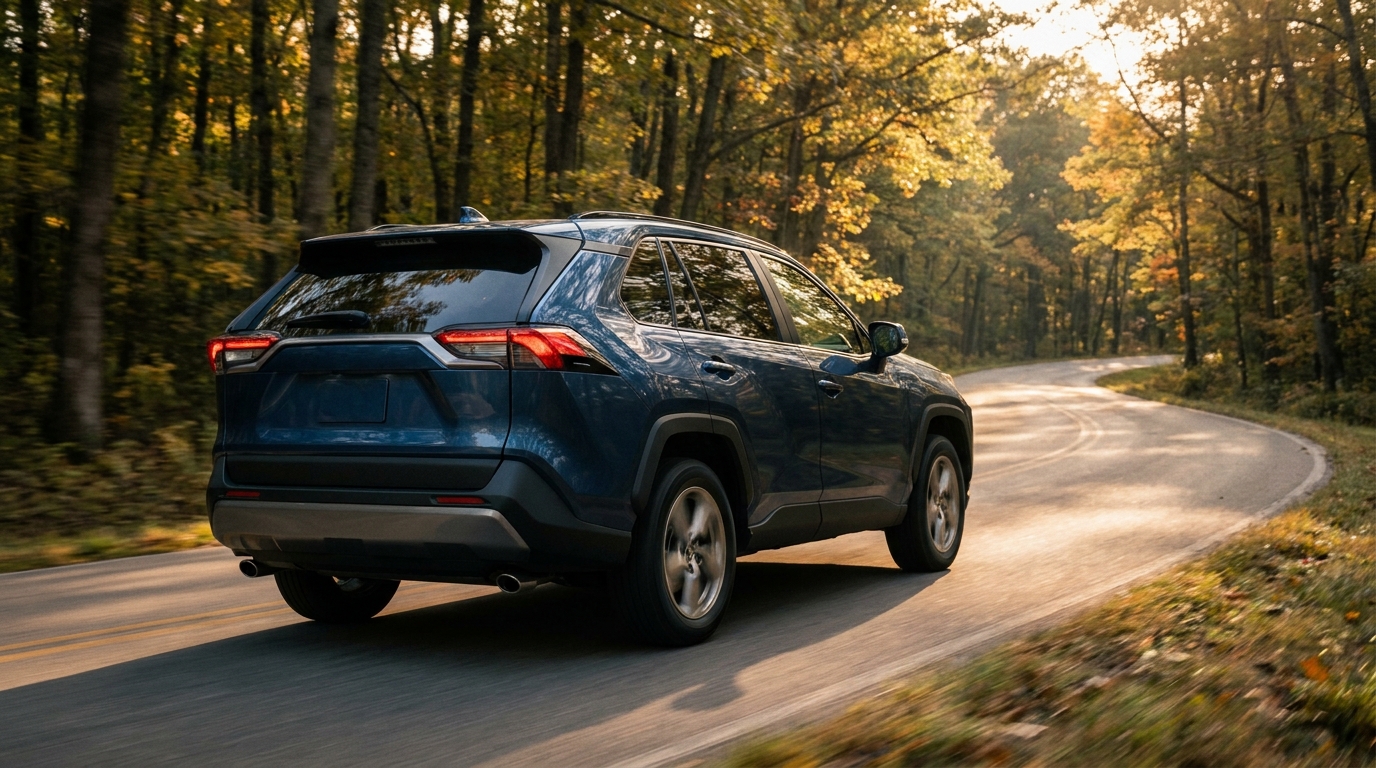
SUVs and crossovers now make up over half of US new-car sales, and the hybrid versions have finally caught up to what sedans were doing a decade ago. These are the five most efficient in the class for 2026, and what to weigh before signing.
Toyota RAV4 Hybrid — 40 MPG combined, from $33,100
The bestselling hybrid crossover in America, and for good reason: 40 MPG combined, AWD standard on most trims, and Toyota's hybrid-system reliability track record. Real-world owner data (Fuelly) averages 36 to 39 MPG, within a few MPG of sticker.
Not exciting to drive, but genuinely roomy for its footprint, and the hybrid powertrain smooths out what was an unremarkable gas RAV4. If you need one crossover to do everything for a family, this is the efficiency benchmark.
Honda CR-V Hybrid — 40 MPG combined, from $35,200
Comparable on paper to the RAV4 Hybrid — same EPA combined rating, slightly more refined interior, slightly better driving dynamics. Real-world owners report 37 to 40 MPG, often matching sticker.
Pricing runs a couple thousand above the RAV4 for similar trim levels. Honda's two-motor hybrid system tends to outperform at higher speeds and on hills; Toyota's e-CVT shines in stop-and-go. Pick based on your roads.
Kia Niro Hybrid — 50 MPG combined, from $28,500
The efficiency king of the segment, and the price leader. The Niro is more "tall hatchback" than traditional SUV — less cargo space than a RAV4, no AWD option on the hybrid — but for drivers who don't need either, it's 10 MPG better for roughly $4,500 less than comparable RAV4 Hybrid trims.
Hyundai-Kia's hybrid system has matured well. Reliability data is now strong enough that the Niro's 10-year powertrain warranty isn't just a sales pitch — it's paired with genuinely durable hardware.
Toyota RAV4 Prime (PHEV) — 38 MPG combined + 42 mi electric, from $45,800
The plug-in hybrid version: 42 miles of pure electric range before the hybrid system kicks in. For commutes under 40 miles, most RAV4 Prime owners rarely use gasoline at all — the EPA-rated "combined" is misleadingly low because it understates real-world PHEV usage.
Substantially more expensive than the regular RAV4 Hybrid, but may qualify for the federal plug-in credit depending on current IRS income and vehicle-sourcing rules — check eligibility before assuming the discount applies. For drivers with home charging and short commutes, it effectively becomes an EV 90% of the time with a gas engine in reserve for road trips.
Ford Escape Hybrid — 39 MPG combined, from $32,500
Ford's answer to the RAV4, and increasingly competitive. The Escape Hybrid is a pleasant driver, decent looking, and comes in several trim levels under $36k. Real-world efficiency tracks sticker closely.
Reliability data is slightly behind Toyota and Honda for long-term durability; lease-term ownership is fine, 7-to-10-year ownership has been more mixed. If you're keeping the car 5 years or less, it's worth a look on price.
The takeaway
The hybrid-crossover class has matured into real products, not novelties. With gas prices ranging from roughly $3.00 to $3.80 per gallon nationally in mid-2026, the fuel savings on these models are meaningful — not transformative, but real. If fuel economy is the top priority, the Kia Niro Hybrid wins on both MPG and price; if cargo and AWD matter, the RAV4 or CR-V Hybrid are near-interchangeable and hard to go wrong with. Plug-in hybrids like the RAV4 Prime make sense for a narrow slice of buyers — home chargers, short commutes — and can effectively be EVs most days of the year.