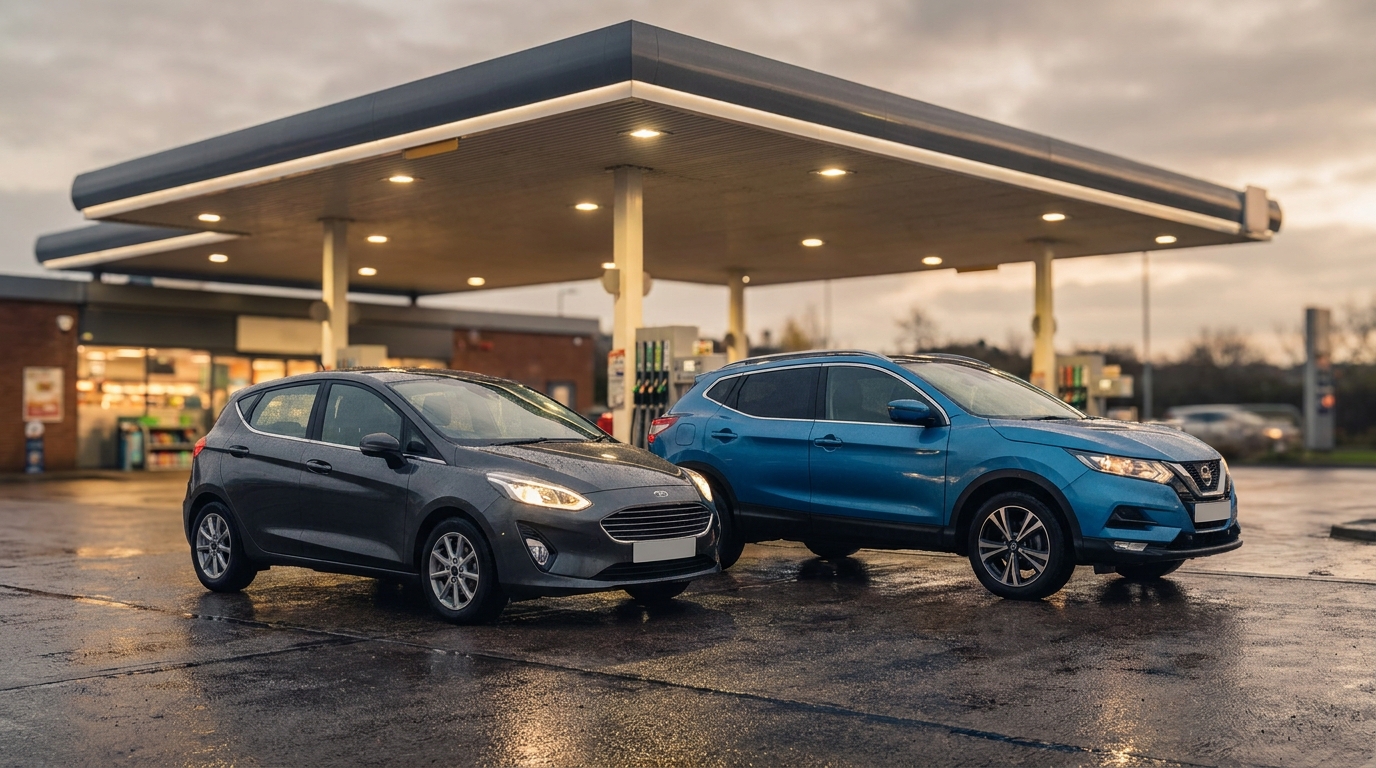
Ask a showroom salesperson and you'll be told the modern SUV is barely thirstier than the small hatchback it replaced. Ask a driver comparing MOT-history fuel figures and you'll get a different answer. For a typical UK motorist doing around 10,000 miles a year — close to the DVSA average car mileage — the real-world MPG gap between a supermini and a family SUV is worth working out in pounds, not slogans. Using published WLTP figures, DESNZ weekly pump prices and a dose of real-world caution, here's what the choice actually costs.
What the official figures say
Modern superminis such as the Ford Fiesta, Vauxhall Corsa and Toyota Yaris typically post WLTP combined figures in the 55–65 MPG range for petrol, with mild-hybrid versions nudging higher. Family SUVs on the same forecourt — the Nissan Qashqai, Kia Sportage, Hyundai Tucson — usually sit in the 40–50 MPG band. That's roughly a 10–15 MPG headline gap before you turn the key.
WLTP is a laboratory cycle, so the absolute numbers flatter both cars. What matters for comparison is that the gap tends to survive real-world driving. Independent testing by What Car? and Honest John's Real MPG database consistently shows superminis returning around 50 MPG in mixed use, while petrol SUVs of the same generation land closer to 38–42 MPG.
Turning MPG into pounds at UK pump prices
The DESNZ weekly road fuel price series has petrol hovering in the 135–145 p/L range through much of 2024–25, with diesel a few pence higher. Take a working figure of 140 p/L. At 50 MPG a car uses one gallon (4.546 L) every 50 miles, which costs about £6.36. At 40 MPG the same 50 miles costs £7.95.
Scale that up to 10,000 miles and the arithmetic sharpens. The 50 MPG supermini burns roughly 909 litres a year, costing about £1,272. The 40 MPG SUV burns around 1,136 litres, costing about £1,590. The annual difference is roughly £320 — not catastrophic, but not negligible either, and it compounds every year you own the car.
Push the SUV down to a more realistic 36 MPG on shorter urban trips and the gap widens to around £430 a year. Push the small car up to 55 MPG on a steady commute and it widens further still.
Why SUVs drink more, briefly
The physics is unromantic. SUVs carry more mass, present a larger frontal area to the air and usually sit on wider tyres with higher rolling resistance. At motorway speeds, aerodynamic drag rises with the square of velocity, so the taller, boxier shape pays a fuel penalty every mile above about 50 mph.
Manufacturers have narrowed the gap with smaller turbocharged engines, cylinder deactivation and 48-volt mild hybrids, and a self-charging hybrid SUV can genuinely close in on supermini economy in town. But like-for-like, on the same fuel, the smaller car still wins.
What else the SUV costs you
Fuel is only part of the running-cost picture. Insurance groups for family SUVs generally sit a few bands higher than equivalent superminis, tyres are larger and dearer to replace, and VED (road tax) tracks CO2 emissions — so the thirstier car often pays more in the first-year showroom tax as well.
Depreciation runs the other way: SUVs have held value more strongly than small hatchbacks in recent years, according to used-market data from Auto Trader and cap hpi. That can offset some of the fuel penalty if you change cars every three or four years, though it doesn't put petrol back in the tank.
The takeaway
For a 10,000-mile-a-year UK driver, choosing a family SUV over a comparable supermini typically costs an extra £300–£450 a year in fuel at current DESNZ pump prices, and more once insurance and tyres are added. That may be a price worth paying for the space and driving position — plenty of buyers clearly think so. But it's a real number, not a rounding error, and it's worth putting on the same spreadsheet as the monthly finance quote before you sign.
