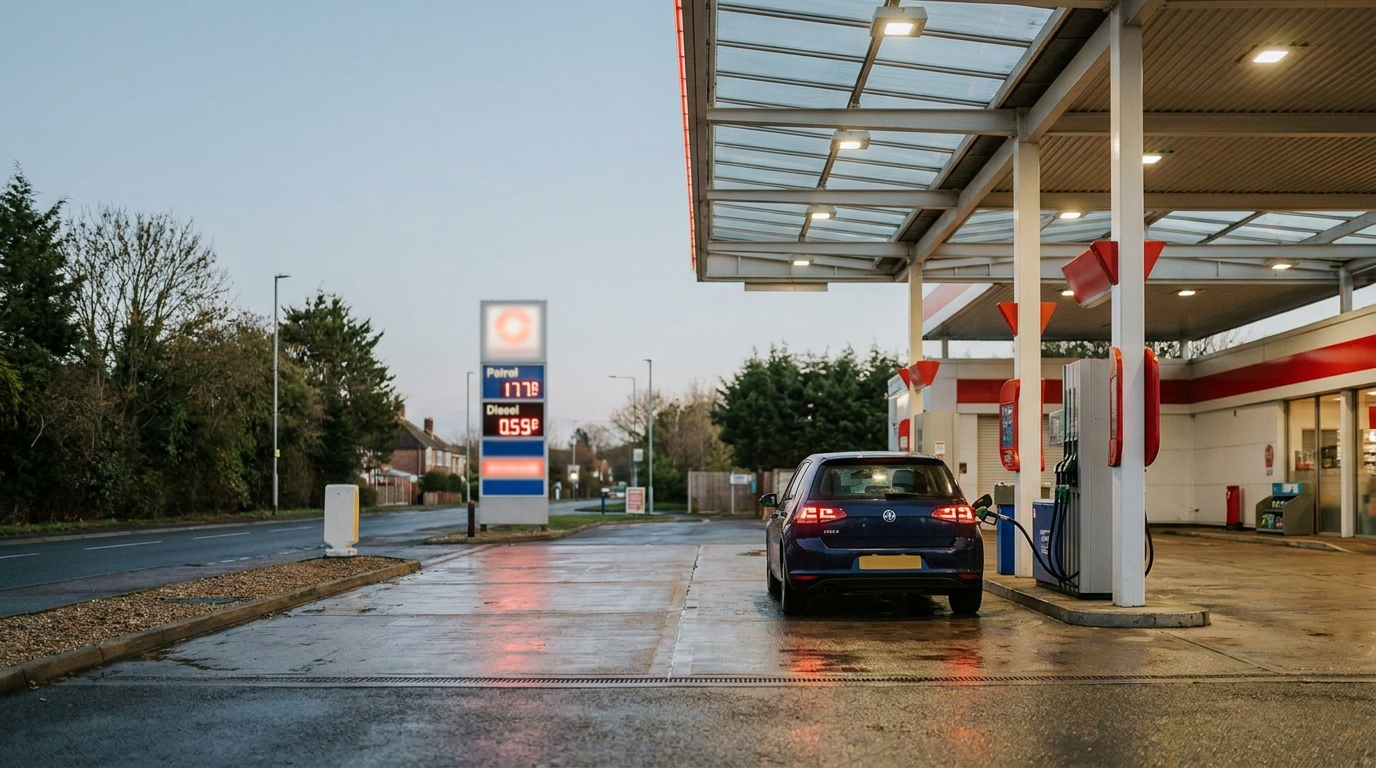
Every few months a viral post claims there is a single 'best day' to fill up in Britain — usually Monday morning, sometimes Tuesday, occasionally Sunday night. The logic sounds plausible: wholesale markets reset after the weekend, forecourts recalibrate, and early birds catch a lower price. But when you line the claim up against the weekly data published by the Department for Energy Security and Net Zero (DESNZ), the AA and RAC Fuel Watch, the picture is far less tidy. The real savings lie elsewhere.
What the weekly data actually shows
DESNZ publishes UK average pump prices every Monday, based on a sample gathered the previous week. Those figures do not break the day down hour by hour, but they do reveal how the national average moves week to week. The AA's monthly Fuel Price Report and RAC Fuel Watch add retailer-level detail, including the gap between supermarket and non-supermarket forecourts.
Across recent years, weekly movements in the UK average have typically been small — often a penny or two per litre — and driven by crude oil, sterling and wholesale margins rather than the calendar. When the RAC or AA highlight a 'good week to fill up', they are usually pointing at a wholesale drop that retailers have been slow to pass on, not a Monday-versus-Friday rhythm.
In other words, the national data does not support the idea that a specific weekday is reliably cheaper. If your local Tesco cuts by 2p on a Thursday, that is a retailer decision, not a UK-wide pattern.
Where the day-of-week myth comes from
Two things feed the myth. First, some supermarkets historically ran mid-week promotions — money-off vouchers linked to a grocery shop, or short campaigns after a wholesale fall. Drivers who filled up on those days genuinely paid less, and the habit stuck.
Second, forecourt prices tend to drift upward ahead of bank holidays and long weekends, so a Friday fill can feel more expensive than the Monday before. That is a seasonal effect, not a weekly one, and it is not universal — plenty of Fridays in the DESNZ series are cheaper than the Mondays that follow them.
The honest summary: day of week is, at best, a weak signal. Retailer, region and the crude oil trend over the previous fortnight matter far more.
What actually moves the price you pay
The biggest single lever on UK pump prices is the wholesale cost of refined petrol and diesel, which tracks Brent crude with a lag of one to two weeks. The RAC has repeatedly flagged periods when wholesale falls were not passed through quickly, and the Competition and Markets Authority's 2023 road fuel review found that retailer margins had widened compared with historic norms.
The second lever is where you buy. Supermarket forecourts (Asda, Tesco, Sainsbury's, Morrisons) are consistently a few pence per litre below the UK average, while motorway service stations sit well above it — often 15–20p/L more, according to the AA. Independent rural forecourts vary widely.
Fuel duty (currently frozen at 52.95p/L, with the 5p cut extended per recent OBR and Treasury statements) plus 20% VAT together make up roughly half of the pump price. Neither moves on a Monday.
A practical routine that beats clock-watching
Rather than chasing a magic day, a small set of habits will save more over a year than any weekday rule. The savings compound quickly for anyone doing 10,000+ miles.
- Check a price-comparison tool (PetrolPrices, Confused.com fuel finder, or your supermarket's app) before any non-routine fill.
- Default to supermarket forecourts for regular fills; treat motorway service stations as emergency-only.
- Watch RAC Fuel Watch and AA reports for weeks when wholesale has fallen but pumps have not — that is when to top up.
- Keep the tank between a quarter and three-quarters full so you are never forced into a bad-value forecourt.
- Combine fill-ups with existing journeys rather than making a special trip, which erodes the saving.
So, Monday or Friday?
If we must answer the question literally: on the DESNZ weekly series there is no consistent Monday-versus-Friday gap large enough to plan around. Some weeks Monday is a touch cheaper; some weeks it is the other way. The variation between two nearby forecourts on the same day is almost always larger than the variation between two days at the same forecourt.
The one caveat is bank-holiday weekends and school-holiday Fridays, when demand and price both tick up. Filling earlier in that week is sensible — not because Monday is magic, but because Friday afternoon before a getaway is predictably the worst moment.
The takeaway
Day-of-week timing is a distraction. The evidence from DESNZ, the AA and RAC Fuel Watch points to three things that actually cut your annual fuel bill: choosing supermarket forecourts over motorway stops, using a price-comparison app before each fill, and topping up in weeks when wholesale has clearly fallen. Do those consistently and you will beat any Monday-morning ritual — regardless of which day of the week your tank happens to run low.