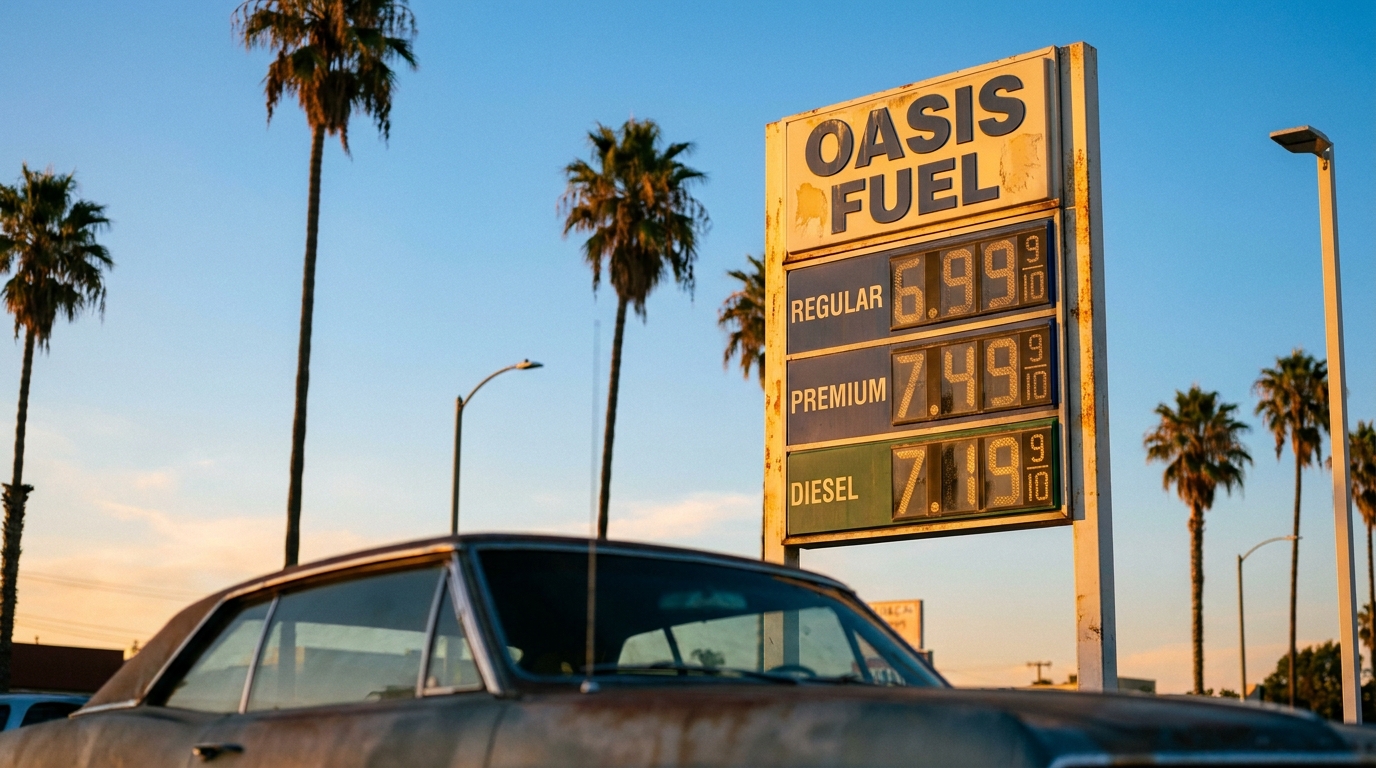
There is a reliable seasonal pattern in US retail gas prices: small but persistent spikes in the week or two before Memorial Day, July 4th, and Labor Day. The pattern is real. But it's not a coordinated markup — it's simple supply-and-demand playing out on a predictable calendar.
What the EIA data actually shows
The EIA's weekly retail gasoline survey has 30 years of history, and the pattern is clear: average retail prices rise about $0.10 to $0.25 per gallon in the two to three weeks leading up to major summer travel weekends, then typically give back half of that increase within ten days after the holiday.
The increase happens almost entirely on the wholesale side — meaning refiners and terminals are raising their prices before gas stations do. The station markup (crack spread) is roughly stable week to week.
Demand inventories don't lie
US gasoline inventories are published weekly by the EIA. In the weeks before summer holidays, two things happen: consumer demand rises sharply (AAA estimates Memorial Day travel volume, for example), and refiners and terminals draw down stocks to meet anticipated demand spikes.
When inventories fall below the five-year average going into a peak-demand weekend, wholesale prices rise. This is not coordination — it's what markets do when expected demand exceeds visible supply.
The summer-blend timing compounds it
Memorial Day in particular often coincides with the middle of the winter-to-summer blend transition (see: our article on seasonal blends). Refineries are running at reduced capacity during the changeover and may still be selling down cheaper winter gas while producing more expensive summer gas.
This is why the Memorial Day spike is consistently the largest of the year — demand is up, supply logistics are mid-switch, and summer-blend production costs are working their way through wholesale markets.
Hurricane season adds volatility later
Late August and September (Labor Day, back-to-school) overlap with peak Atlantic hurricane season. Gulf Coast refineries produce about 45% of US gasoline, and a credible hurricane threat — even one that doesn't make landfall — will cause Gulf refiners to pre-emptively shut down, spiking wholesale prices for 1 to 3 weeks.
This is why some Labor Day spikes are much larger than others. 2005 (Katrina) and 2017 (Harvey) were extreme cases, but smaller versions happen almost every hurricane season.
Is this "price gouging"?
The 30-year pattern is visible in wholesale prices that retailers don't control. Retail margins are slim (typically $0.10 to $0.20 per gallon gross, and much less net) and remarkably stable. The spike you see at the pump is almost entirely a wholesale phenomenon being passed through.
State attorneys general investigate retail price-gouging complaints after every major spike. The finding, decade after decade, is generally the same: a small number of local markup cases, but the bulk of the price movement is supply, demand, and blend timing.
The takeaway
Holiday price spikes are a calendar feature of the US gasoline market, not a conspiracy. The single highest-impact decision you can make is timing your long road-trip fill-up: do it the Monday or Tuesday before a major holiday weekend, not the Friday afternoon of. Prices don't typically retreat until four to seven days after the holiday has passed.