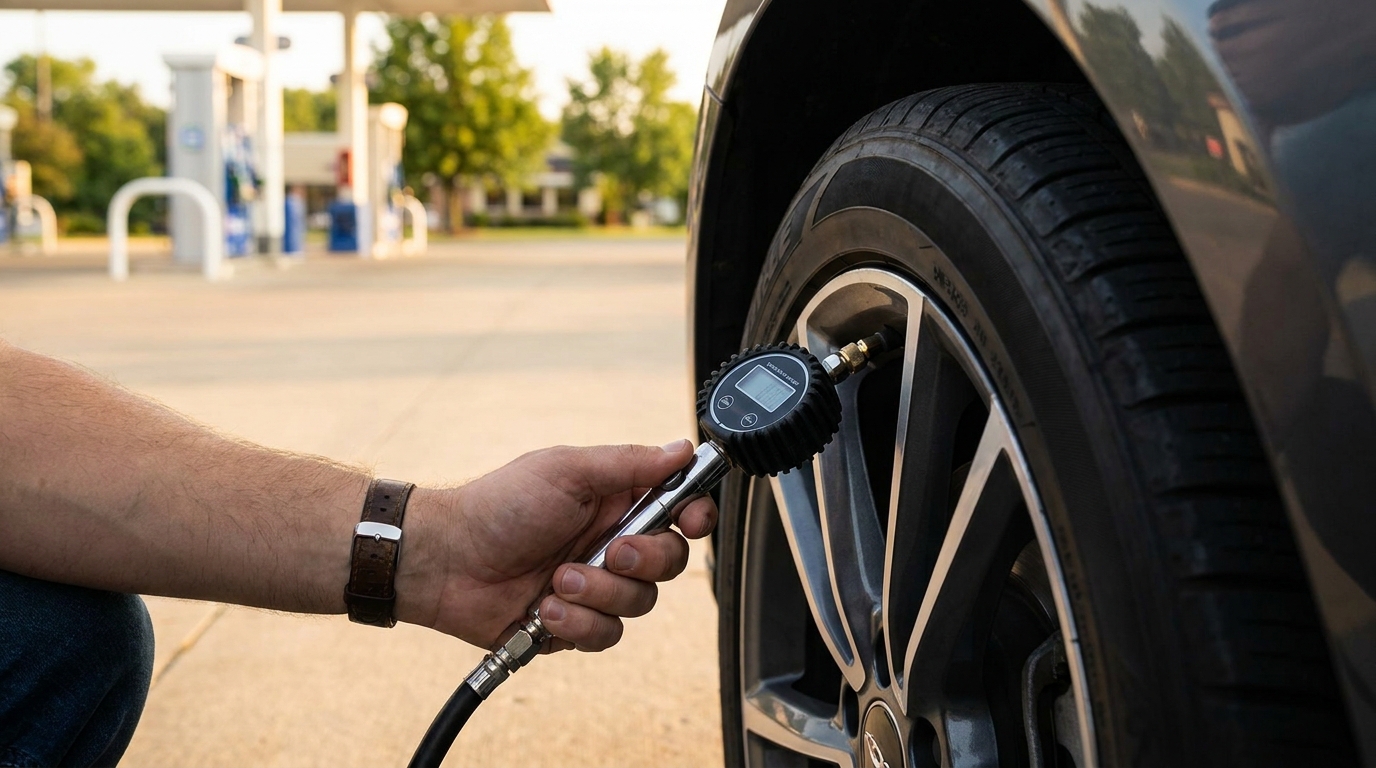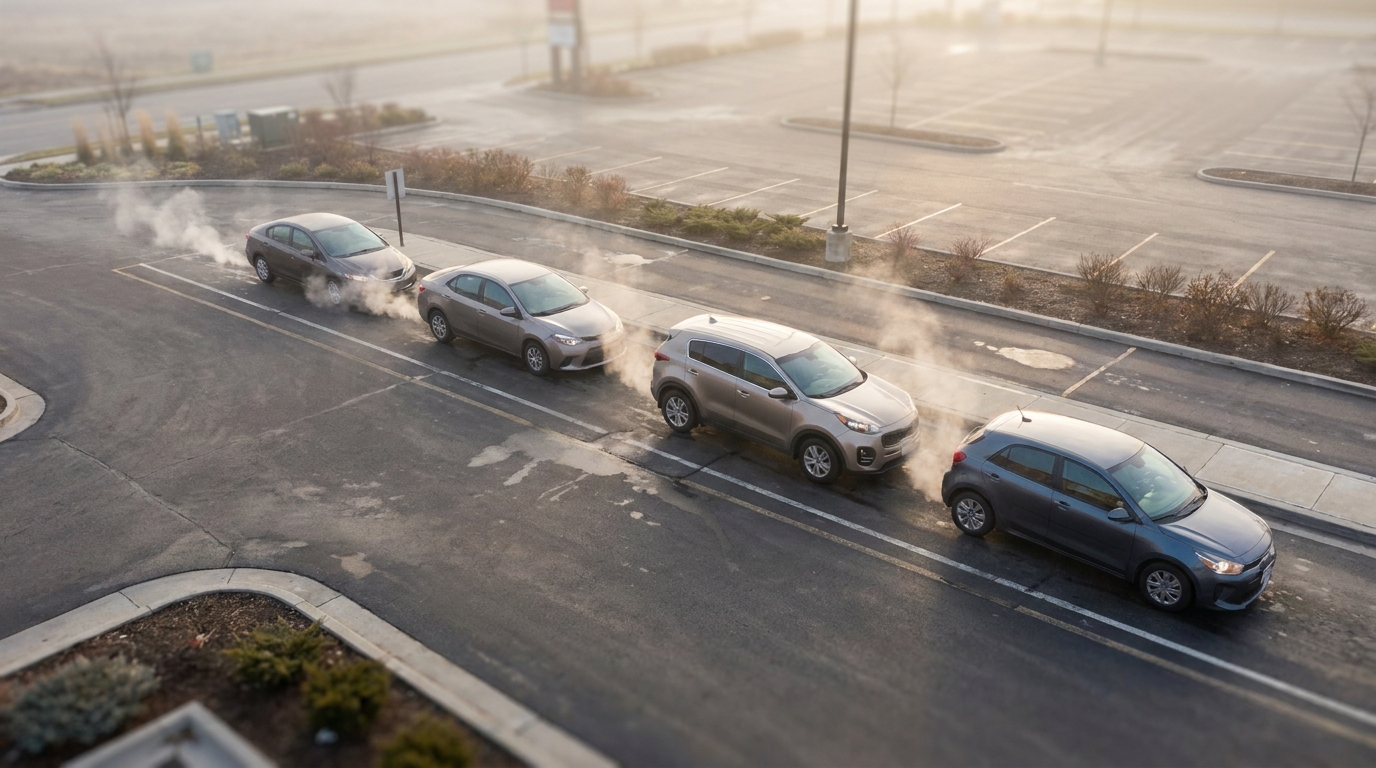
The Environmental Protection Agency puts it simply: an idling car burns between a quarter and a half gallon of gas per hour, depending on engine size. The average US driver racks up 16 minutes of idle time per day — about $70 to $120 a year in fuel, doing absolutely nothing.
Where the idling actually happens
A US Department of Energy field study found that idling splits roughly into four buckets: warm-ups (25%), drive-thrus and pickups (20%), traffic lights (15%), and "other" — which is mostly just sitting in the car with the engine on (40%).
The last bucket is the surprise. Modern drivers routinely sit in parking lots, at school pickup, and in driveways with the engine running, often to keep A/C or the stereo going. It adds up faster than most people realize.
The 10-second rule
The widely repeated guideline — "restarting burns more fuel than idling for 30 seconds" — is outdated. Modern fuel-injected engines use almost no extra fuel to restart, and starter motors are built for tens of thousands of cycles.
The updated EPA guidance: if you'll be stopped for more than 10 seconds, shutting off the engine saves fuel. This is exactly what factory-fit auto stop-start systems do, and despite driver complaints about the jerkiness, they demonstrably cut real-world fuel use 3 to 7%.
| Stop length | Fuel idling | Restart fuel | Verdict |
|---|---|---|---|
| Under 10 sec | ~0.001 gal | ~0.001 gal | Stay running |
| 10–30 sec | 0.003 gal | 0.001 gal | Shut off |
| 30–60 sec | 0.007 gal | 0.001 gal | Shut off |
| 1–5 min | 0.03–0.04 gal | 0.001 gal | Always shut off |
| 5+ min | 0.04+ gal | 0.001 gal | Always shut off |
Warming up a modern engine is almost always waste
The "warm up the car for five minutes" habit comes from carbureted engines, which genuinely ran poorly cold. No production car sold in the US since 1995 has a carburetor.
Modern fuel-injected engines reach operating temperature faster by driving gently than by idling. A cold idle can easily waste a tenth of a gallon in the first five minutes — one tank in a year, just scraping frost and letting the car "wake up."
The one real exception: defrosting the windshield for visibility and safety. That's a safety cost, not a comfort cost, and it's worth it.
Drive-thru math
A typical drive-thru takes four to seven minutes. At a conservative 0.4 gallons per hour idle rate, that's $0.12 to $0.20 of gas, per visit. Modest, until you realize a daily coffee habit adds up to $40 to $70 a year in idle fuel alone.
Parking and walking inside is almost always faster anyway — drive-thru lines are longer than they look because most of the time is spent in queue, not at the window.
When idling is actually fine
In traffic, at short stoplights, and while briefly waiting to turn, restarts aren't worth it — you'll be moving in under 10 seconds.
In sub-freezing weather, extended cold idling can cause fuel washdown (liquid gasoline diluting oil on cylinder walls). Five minutes is the rough upper limit most manufacturers recommend before the engine should either be driven or shut off.
If your car has factory auto stop-start, trust it. It's tuned for exactly these trade-offs and will only restart when the system judges it's worth it.
The takeaway
Idling is one of the few fuel-economy habits you can change without changing how you drive. Turn the key off at the pickup line, at the curb, in the driveway. The savings show up quietly, and the engine won't miss the extra warm-up it never needed.