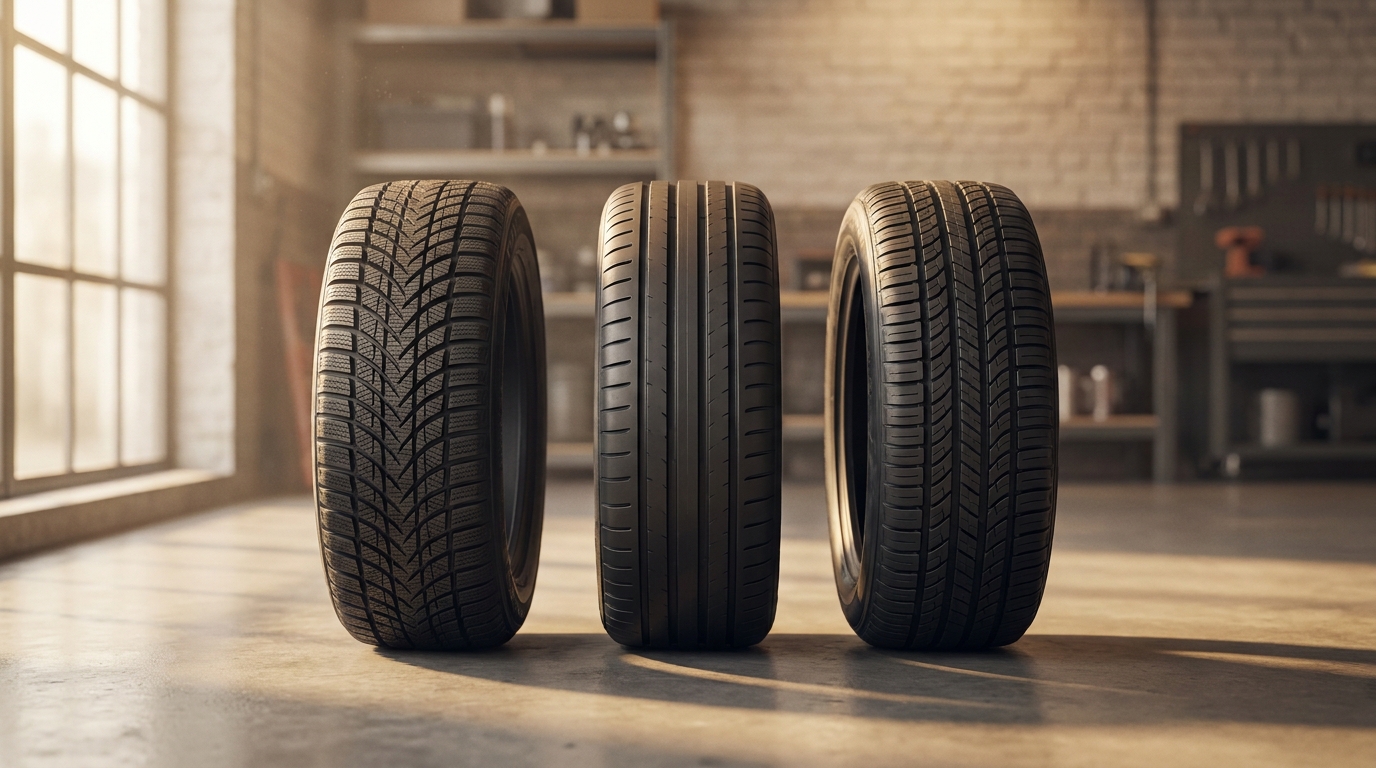
Drivers obsess over engine tuning and driving habits, but the four contact patches under the car quietly decide a meaningful share of every fill-up. Rolling resistance, tread design, and rubber compound all shift how much energy the engine wastes just keeping the car moving. The gap between a low-rolling-resistance all-season and an aggressive winter tire is not trivial, and over a year it often dwarfs the price difference between sets.
Why Tires Move the MPG Needle
Rolling resistance is the energy lost as a tire deforms under load. The US Department of Energy estimates that tires account for roughly 4 to 11 percent of passenger car fuel consumption, depending on speed and conditions. On the highway, where aerodynamic drag dominates, the share sits at the lower end. In stop-and-go city driving, tires take a larger bite.
A 10 percent reduction in rolling resistance translates to about 1 to 2 percent better fuel economy, according to figures cited by fueleconomy.gov. That sounds small, but spread across 12,000 miles a year at current US pump prices, it adds up to real money. Multiply by the lifespan of a tire set, typically 40,000 to 60,000 miles, and the compound effect becomes hard to ignore.
All-Season Tires: The Default Compromise
All-season tires are engineered to be acceptable in most conditions rather than excellent in any. Their tread compounds stay reasonably pliable in cool weather and firm enough in summer heat, and the tread blocks balance water evacuation against contact area. For the majority of US drivers who see mild winters and moderate summers, they are the practical default.
From a fuel economy standpoint, mainstream all-seasons sit in the middle of the pack. Within this category, however, the spread is wide. A standard touring all-season and a low-rolling-resistance variant marketed for hybrids or EVs can differ by 5 to 10 percent in rolling resistance, which the EPA notes can shift observed MPG by roughly 1 to 3 percent in real-world use.
Summer Tires: Grip First, Economy Second
Summer tires use softer compounds and stiffer sidewalls tuned for warm-pavement grip. They reward spirited driving with shorter stopping distances and sharper steering response, but the softer rubber generates more heat and more rolling resistance under steady cruising.
Compared with a low-rolling-resistance all-season, a max-performance summer tire often costs 3 to 6 percent in fuel economy at highway speeds. Drivers who choose summer tires usually accept this trade for handling, and that is a reasonable choice. The mistake is assuming the penalty is negligible. Over 12,000 miles, the difference can easily reach 30 to 60 gallons of additional fuel.
Winter Tires: The Biggest Hit, and the Best Reason to Take It
Dedicated winter tires use compounds that remain flexible below 45 degrees Fahrenheit and tread patterns full of sipes designed to bite snow and slush. That flexibility comes at a cost. Rolling resistance on winter tires typically runs 10 to 20 percent higher than a comparable all-season, which translates to a fuel economy penalty in the 3 to 7 percent range.
The safety case for winter tires in northern states is well established, and we would not advise against them. The point is to understand the cost. Drivers who leave winter tires on through spring and summer pay the penalty for months longer than necessary, and they wear the soft compound out faster on warm pavement. Swapping back to all-seasons by April is both safer and cheaper.
Pressure, Wear, and the Numbers You Control
Tire type sets the ceiling, but maintenance decides whether you reach it. The DOE estimates that underinflation costs about 0.2 percent in fuel economy for every 1 psi below spec, averaged across all four tires. A car running 6 psi low, which is common and often invisible to the eye, loses more than 1 percent in MPG on top of whatever the tire design already costs.
Wear matters too. A worn tire with shallow tread actually has slightly lower rolling resistance than a new one, but the safety margin in wet weather collapses well before the legal limit. Rotation every 5,000 to 7,500 miles keeps wear even and preserves both economy and grip across the set.
The takeaway
Choose the tire that matches your climate and driving, then squeeze every percent out of it. For most US drivers, that means a low-rolling-resistance all-season, swapped to dedicated winters only when temperatures stay below 45 degrees. Check pressures monthly, rotate on schedule, and remember that the cheapest set on the shelf often costs the most over its lifetime once fuel is counted.