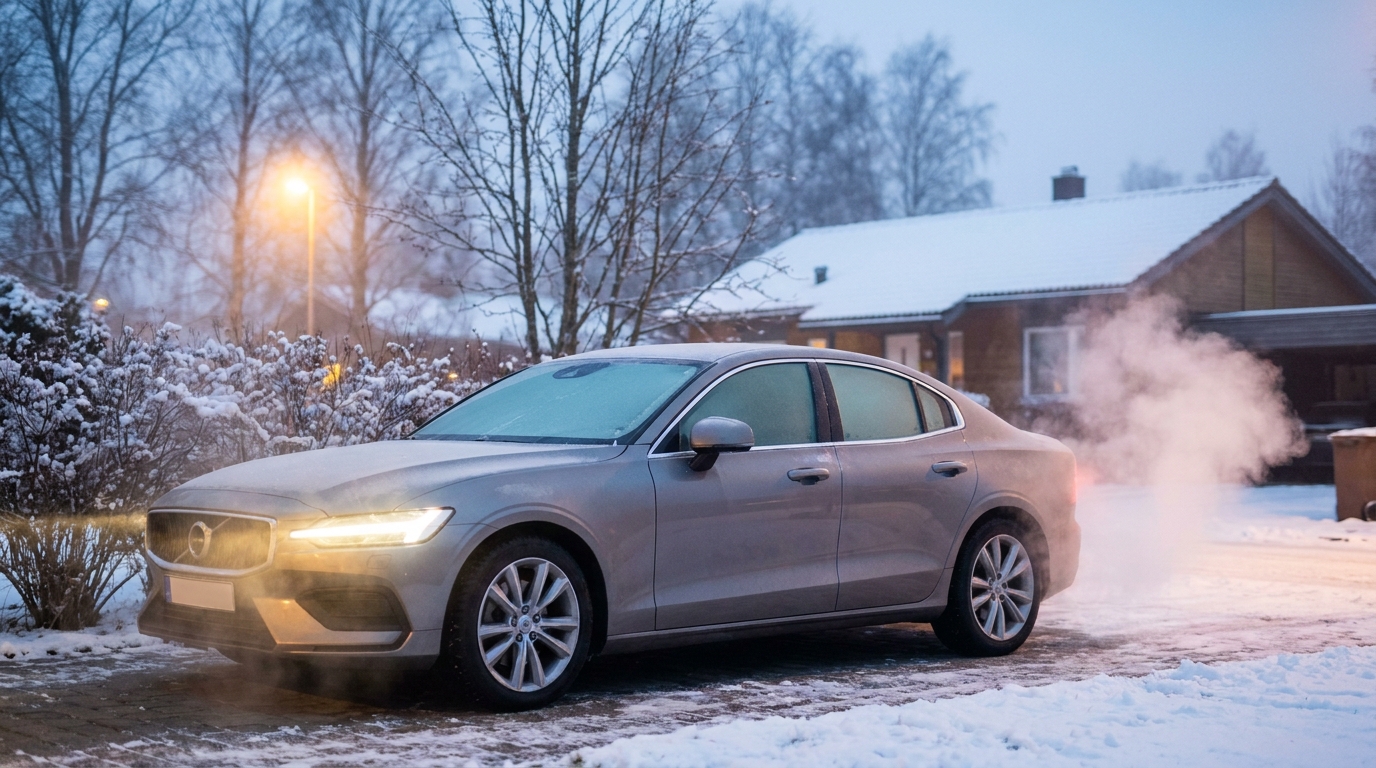
Every winter, drivers notice the same thing: the tank does not go as far. It is not your imagination, and it is not a broken sensor. The US Department of Energy estimates conventional gasoline vehicles lose roughly 15% of their fuel economy in short city trips when temperatures drop to around 20°F, and hybrids and EVs can lose even more. Here is what actually causes it, and which fixes are worth your time.
The physics working against you
Cold air is denser than warm air, which increases aerodynamic drag at any given speed. Cold engine oil and transmission fluid are thicker, so the engine spends more energy pushing internal components around before things warm up. Tire pressure also drops roughly 1 psi for every 10°F decline in ambient temperature, and underinflated tires add rolling resistance on every mile you drive.
None of this is a defect. Combustion engines are designed to operate efficiently at a specific temperature window, usually around 195 to 220°F coolant temperature. Until the engine reaches that window, the computer runs a richer air-fuel mixture, ignition timing is conservative, and catalytic converters are not fully lit off. Emissions go up and mpg goes down.
Why short trips hurt the most
The EPA and fueleconomy.gov both note that a typical engine needs five to fifteen minutes of driving to reach normal operating temperature in cold weather. If your commute is under four miles, the engine may never fully warm up. That means every single mile is driven in the least efficient part of the warm-up curve.
This is why winter mpg penalties are usually reported as a range. Highway trips at steady speed recover most of the loss because the engine reaches temperature quickly and stays there. Short, stop-and-go trips in subfreezing weather can see fuel economy drop 20 to 30% versus the same trip in July.
The accessories that quietly drain the tank
Modern cars pile on electrical loads in winter. Heated seats, heated steering wheels, rear defrosters, headlights running longer in shorter days, and blower motors on high all draw current, which the alternator must generate by loading the engine. Cabin heat itself is mostly free on a gasoline car because it uses waste engine heat, but on a hybrid or EV, cabin heat comes directly from the battery and can cut range by 20 to 40% in severe cold.
Remote start and extended idling to warm the cabin are the single largest avoidable losses. Idling gets zero miles per gallon, and modern fuel-injected engines do not need more than about 30 seconds of idle before driving gently is safe. The old carbureted-era habit of a ten-minute warm-up costs real money.
What actually helps, ranked by effort
Check tire pressure monthly through the winter, using the number on the driver door jamb, not the tire sidewall. This is the cheapest and most reliable single fix. Combine short errands into one trip so the engine warms up once instead of three times. Remove roof racks and cargo boxes when not in use, since drag penalties are worse in denser winter air.
Use the correct winter-grade oil specified in your owner's manual, typically a 0W-20 or 5W-30 depending on the vehicle. Park in a garage when possible, even an unheated one, because a 20°F starting temperature beats a 5°F starting temperature. Skip the extended warm-up idle. If your commute is very short, consider whether a battery tender or block heater makes sense for older vehicles in cold climates.
What does not help much
Fuel additives marketed as winter mpg boosters have no meaningful independent evidence behind them. Premium gasoline in an engine that does not require it will not improve cold-weather economy. Aftermarket grille blocks can help slightly on highway commutes in extreme cold but risk overheating in mixed driving and are not recommended by most manufacturers.
Aggressive hypermiling techniques like coasting in neutral or drafting behind trucks add risk on icy roads that far outweighs any fuel savings. The gains from smooth driving, moderate speeds, and proper tire pressure are larger and safer than any single trick.
The takeaway
You cannot repeal the physics of cold air and cold oil, but you can control tire pressure, trip planning, and idle time. Those three habits recover most of the manageable losses. Everything else, from additives to premium fuel, is noise. Expect some winter mpg penalty, budget for it, and focus on the fixes with actual evidence behind them.