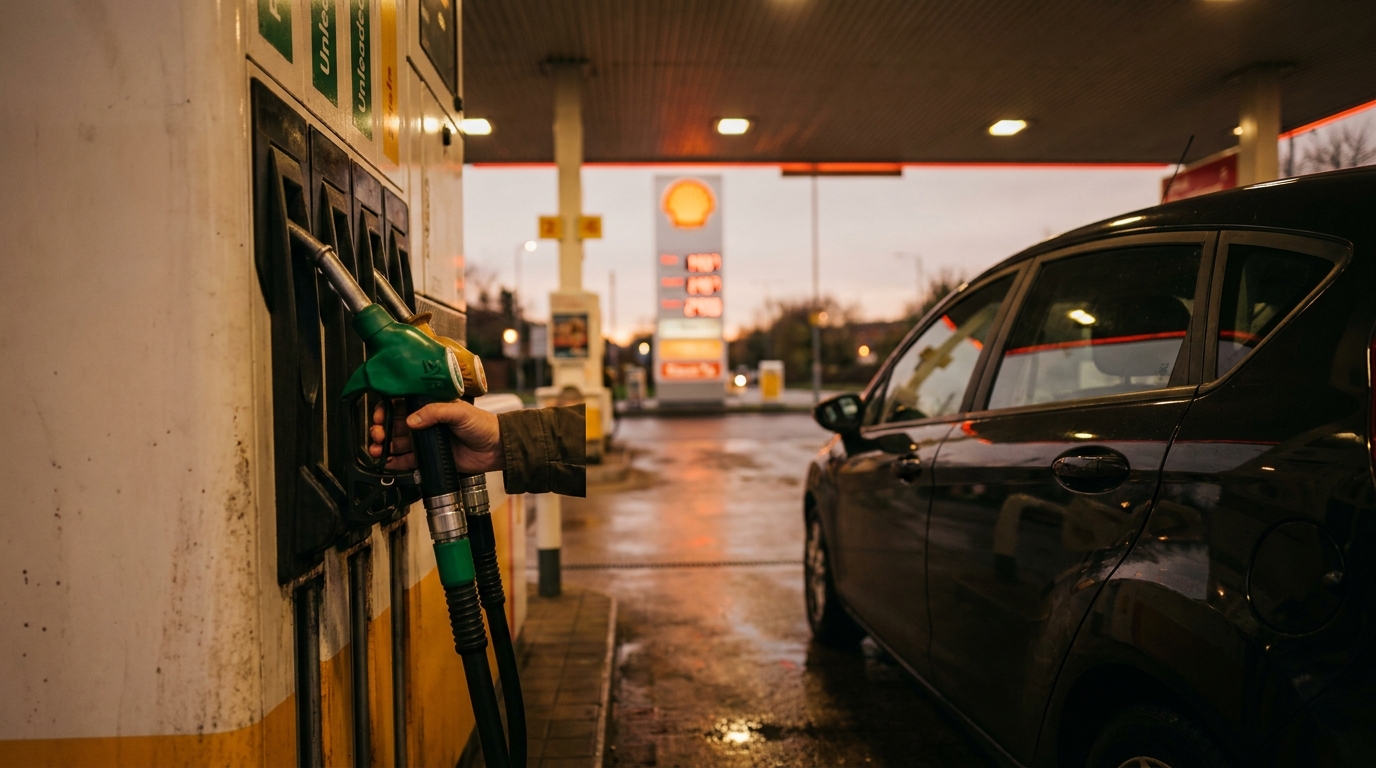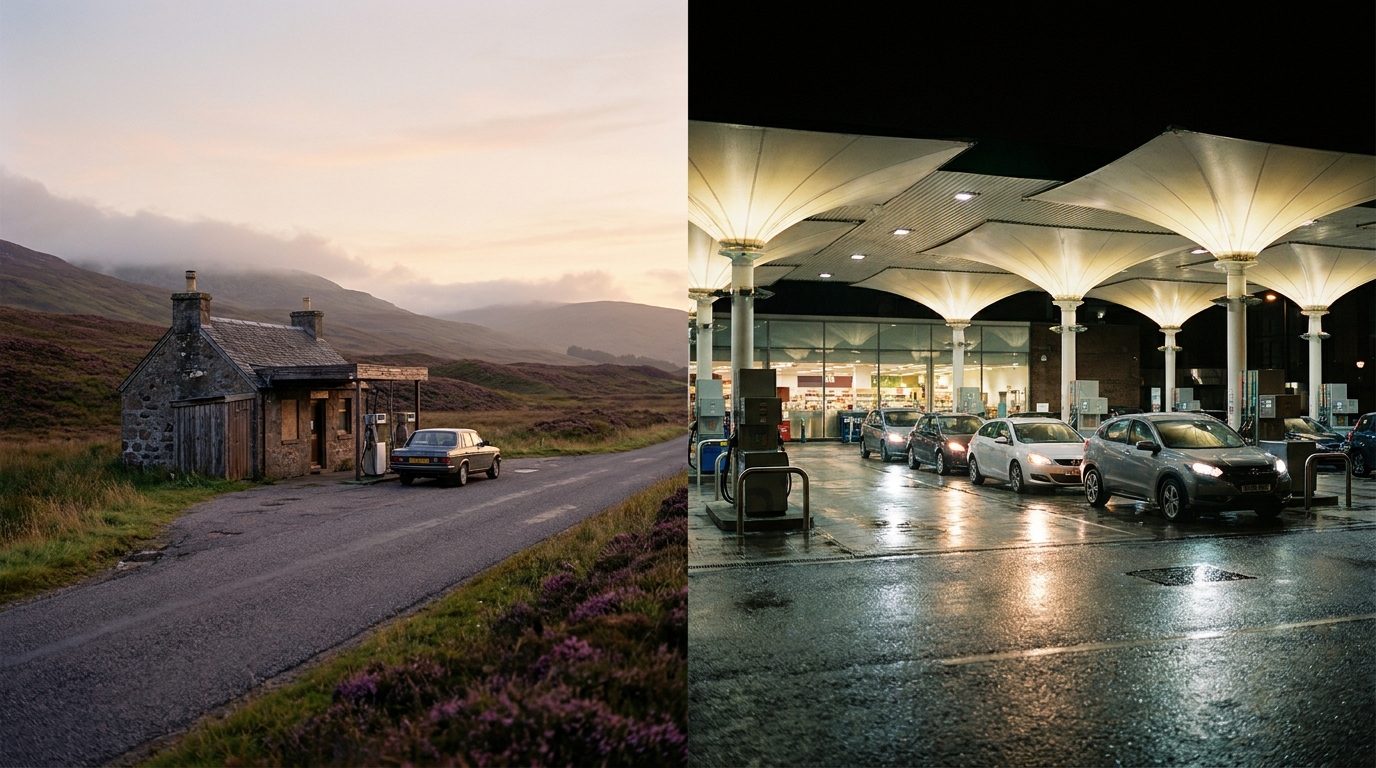
Ask any driver who has toured the UK and they will tell you: fuel is not one price. It is a patchwork, shaped by wholesale costs, competition, delivery distance and sheer local geography. The Department for Energy Security and Net Zero (DESNZ) publishes a single UK average each week, but that headline hides a spread that regularly runs to 20p a litre — and sometimes more — between the cheapest urban supermarkets and the most remote rural forecourts. Here is what the numbers actually look like, and what the gap means in pounds for a typical tank.
What the official data shows
DESNZ's weekly road fuel price series and the RAC Fuel Watch tracker both report UK-wide averages, typically in the region of 135p a litre for petrol and 142p for diesel through much of 2024 and into 2025. Those are national means. The AA's monthly Fuel Price Report goes further and breaks the country into English regions plus Scotland, Wales and Northern Ireland, and it is here the gap starts to open up.
In a typical AA report, Northern Ireland and Yorkshire tend to show up as among the cheapest for petrol, often 2–4p below the UK average, while the South East, London and Scotland sit at or above it. The differences at regional level are modest — usually 3–5p a litre. The real spread appears when you drop below the regional average to individual forecourts.
The Competition and Markets Authority's 2023 road fuel market study confirmed what drivers had long suspected: retailer margins have widened since 2019, and areas with fewer competing sites see consistently higher prices. Rural Scotland, mid-Wales and parts of the South West are the clearest examples.
London vs the Highlands: the real spread
In central and outer London, competition from Tesco, Sainsbury's, Asda and Morrisons superstores tends to keep petrol within a penny or two of the UK average, sometimes below it. A driver in Croydon or Enfield can regularly find unleaded at or under 133p when the national average is 135p. Motorway service areas on the M25 corridor, by contrast, routinely charge 15–20p more per litre — a premium that has drawn repeated criticism from the AA and RAC.
Head north and west, and the picture changes sharply. Prices on the Scottish mainland north of Inverness typically run 5–10p above the UK average. On the Western Isles, Orkney and Shetland, 15–25p above is normal, and individual island forecourts have been recorded at more than 30p above the cheapest London supermarkets. Delivery logistics, low throughput and the absence of supermarket competition all feed in.
The UK Government's Rural Fuel Duty Relief scheme knocks 5p a litre off duty at eligible remote forecourts, but even with that, a fill-up in Stornoway or Lerwick remains materially dearer than one in Dagenham.
What the gap costs a typical driver
For a 55-litre tank, a 20p-a-litre gap is £11 per fill. A driver covering 10,000 miles a year at 45 MPG burns roughly 1,010 litres — so a persistent 20p premium adds about £202 a year. At 30p, it is over £300.
That said, most UK drivers never experience the extremes. The realistic spread for someone living in a mid-sized town with two or three supermarket forecourts within a short drive is closer to 4–8p a litre versus the national average, worth £40–£80 a year on the same mileage.
The bigger avoidable cost is the motorway premium. Filling at a service area instead of a supermarket 3 miles off the junction can cost an extra £8–£11 per tank, and that is a choice most drivers can plan around.
Why the gap exists — and why it is unlikely to close
Wholesale petrol and diesel prices are set on global markets and vary little between UK depots. The real drivers of regional variation are delivery distance from refineries and import terminals, the number of competing sites in a local catchment, and forecourt throughput. A supermarket shifting 10 million litres a year can accept a much thinner margin per litre than a village pump selling a tenth of that.
The CMA's ongoing pump-price monitoring and the incoming Fuelfinder open-data scheme are intended to sharpen competition by letting drivers compare live prices. Early evidence from pilot schemes suggests transparency does compress margins in competitive areas, but it does little for places where there is simply no alternative forecourt within a reasonable drive.
In short: the London-versus-Highlands gap is a feature of UK geography and retail structure, not a temporary distortion. Expect it to narrow slightly in competitive corridors and to persist stubbornly at the extremes.
The takeaway
The UK does not have one pump price — it has a range that spans roughly 30p a litre from the cheapest London supermarket to the dearest island forecourt. For most drivers the practical spread is far smaller, and the single biggest avoidable premium is filling at motorway services rather than a supermarket a few minutes off the junction. Check the AA and RAC Fuel Watch trackers before long trips, and plan fill-ups around supermarket sites where you reasonably can.