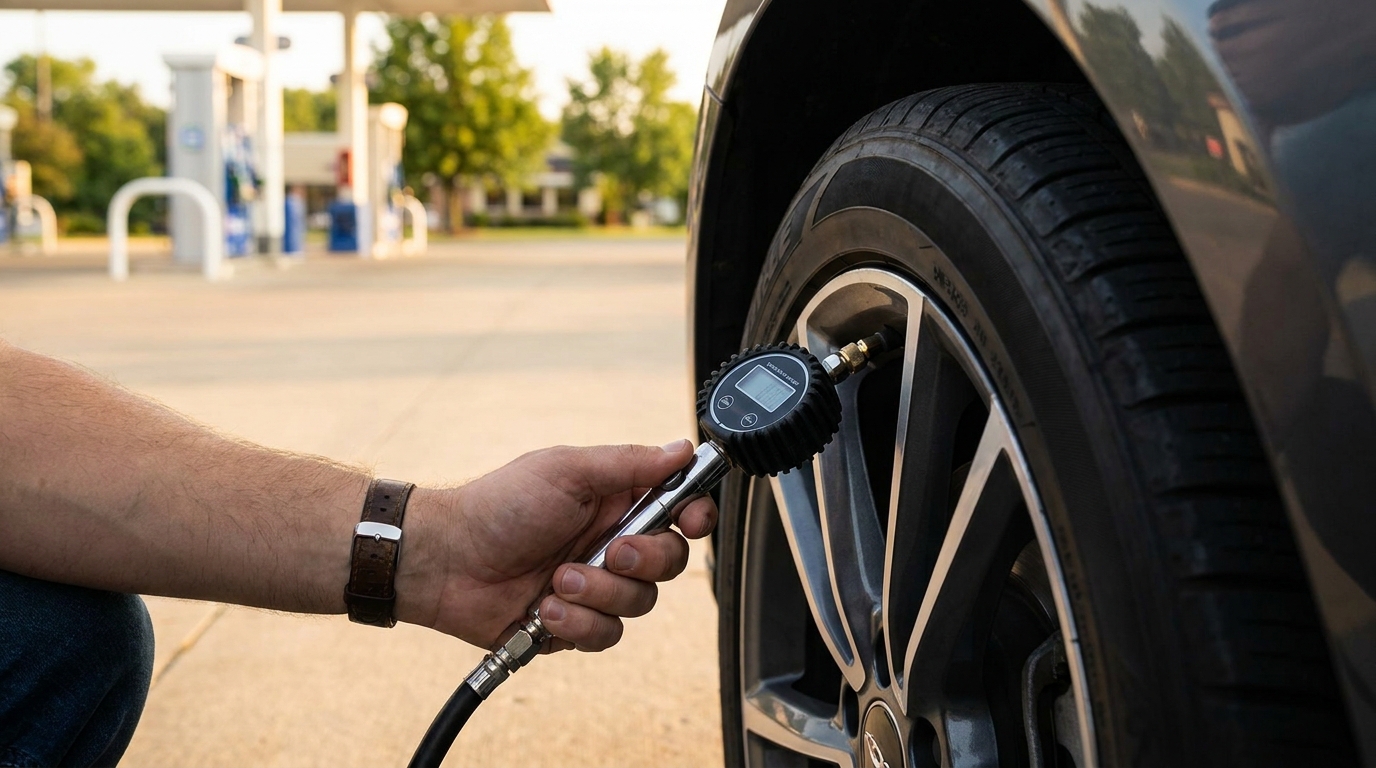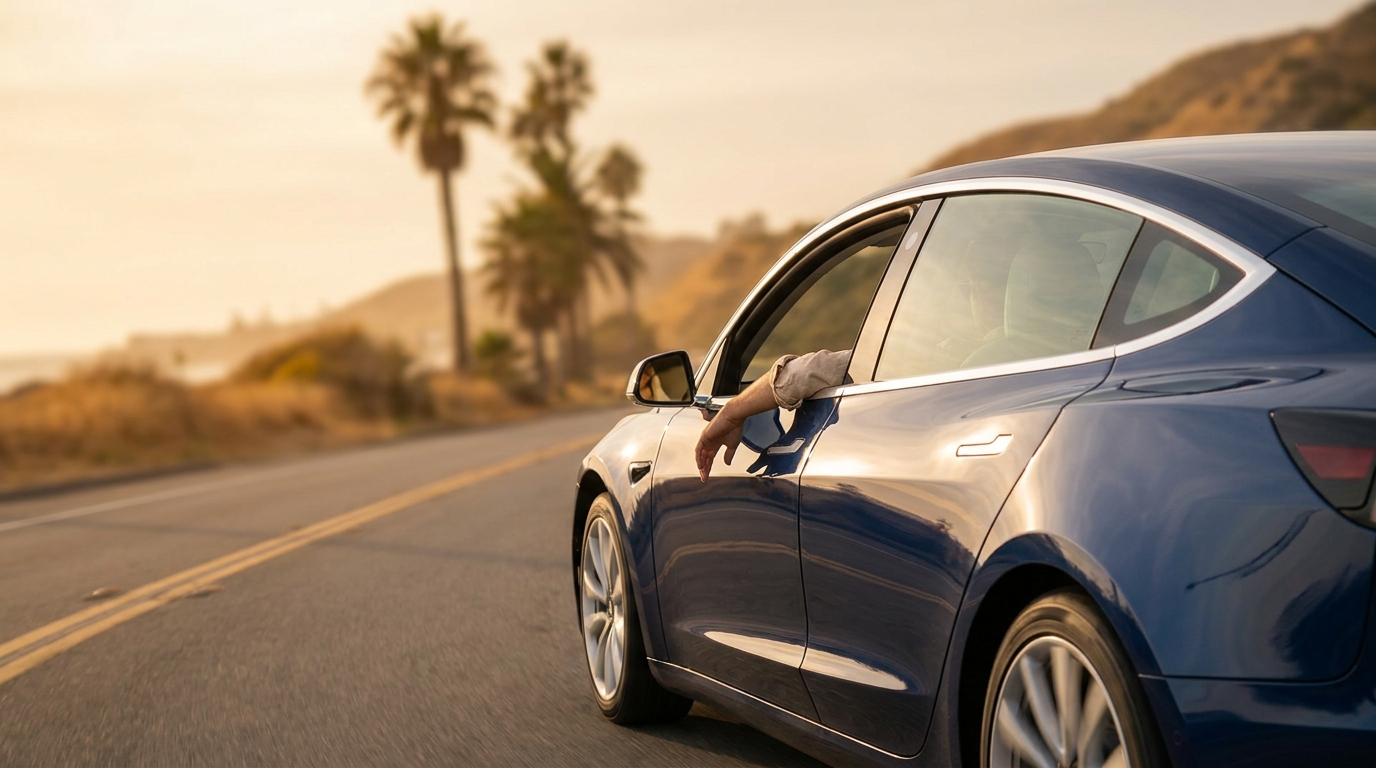
This is one of the most-asked questions in fuel economy, and the answer is almost a perfect coin flip. Below about 40 mph, rolling the windows down beats running the A/C. Above that, A/C wins. The details matter — and they matter more in some cars than others.
What A/C actually costs you
A modern car's A/C compressor pulls about 3 to 4 horsepower from the engine when it's running at full tilt. At highway cruise that's roughly a 3 to 5% fuel-economy hit — in the range of 1 to 2 MPG on a typical sedan.
Cycling A/C (where the compressor switches off briefly between cooling cycles) uses less. Auto climate control running at a moderate temperature uses about half the fuel of A/C cranked to "MAX."
What windows-down actually costs you
An open window turns the smooth body shape your car was engineered as into a crude air scoop. At low speeds that's trivial. At highway speeds it's significant — roughly the same MPG penalty as a small roof-mounted cargo box.
SAE studies have measured the penalty at around 8 to 10% fuel-economy loss at 65 mph with one or two front windows fully open. That's roughly double what A/C costs you at the same speed.
The crossover speed
SAE and Consumer Reports testing have converged on a rough break-even: below 40 to 45 mph, windows down wins. Above that, A/C wins. The exact crossover depends on the car (aerodynamic sedans favor A/C earlier; boxy SUVs tolerate open windows longer), but the middle of the range is remarkably stable.
City driving under 45 mph? Windows down is actually more efficient — and often more pleasant. Suburban streets under 50 mph? It's a wash. Highway at 65 mph or above? A/C, every time.
The "vent first" trick
When you return to a hot car, don't just blast A/C at a sealed cabin. The interior air can hit 140°F, and your compressor has to fight all that trapped heat before it cools anything useful.
Open all four windows for the first 30 to 60 seconds of driving with A/C off. Most of the hot air flushes out. Then roll up, switch to A/C, and the system cools down a much smaller temperature delta — meaningfully less energy to get to the same comfort point.
EVs change the math slightly
On an EV, "fuel economy" becomes range. A/C in an EV typically costs 5 to 10% of range, roughly the same proportion as gasoline cars. But there's no idle-vs-cruise distinction — an EV sitting in traffic with A/C on is using almost zero energy for propulsion, so climate comfort becomes a much larger fraction of total consumption.
On a hot day, EV drivers who pre-cool the cabin while still plugged in effectively get free A/C: the energy comes from the wall, not the battery. Most modern EVs have a pre-conditioning feature specifically for this.
The takeaway
The right answer depends on speed. Low-speed city driving — windows. Highway — A/C. In between, flip a coin; you won't notice the difference in the MPG average. Don't crank max A/C from a hot start, and don't drive 75 mph with both front windows open unless you enjoy paying a 10% fuel tax for the wind.