Apps for finding cheap gas have existed for nearly two decades, but the space has quietly split into two very different categories: information (free, ad-supported, tells you where to go) and cash-back (pays you to fill up at specific stations). Knowing which is which saves you real money — and avoids wasting time on apps that don't do much anymore.
GasBuddy — still the benchmark for information
GasBuddy is the longest-running app in the category and has the deepest station-level price database in the US. Its data comes from crowd-sourced reports by the app's user base, topped up with commercial feeds. Prices are usually current within a few hours in urban areas.
Free to use, supported by ads and their optional Pay with GasBuddy card (which offers small per-gallon discounts at partner stations). If you only install one app from this list, this is the one — it'll tell you the cheapest gas within a 5-mile radius in any US city, with reliable accuracy.
Upside — the cash-back one that actually pays
Upside works differently: it shows you a list of nearby stations that are offering cash-back rebates (typically $0.05 to $0.30 per gallon), you "claim" the offer in the app, fill up, upload the receipt, and get the cash-back credited to bank or PayPal within a week.
Unusually for a cash-back app, the payouts are real and in cash, not points or restricted credit. Users who actually check the app before fill-ups (rather than just going to their usual station) average $175 to $350 in cash back per year on typical driving.
Waze — the incidental gas-price tool
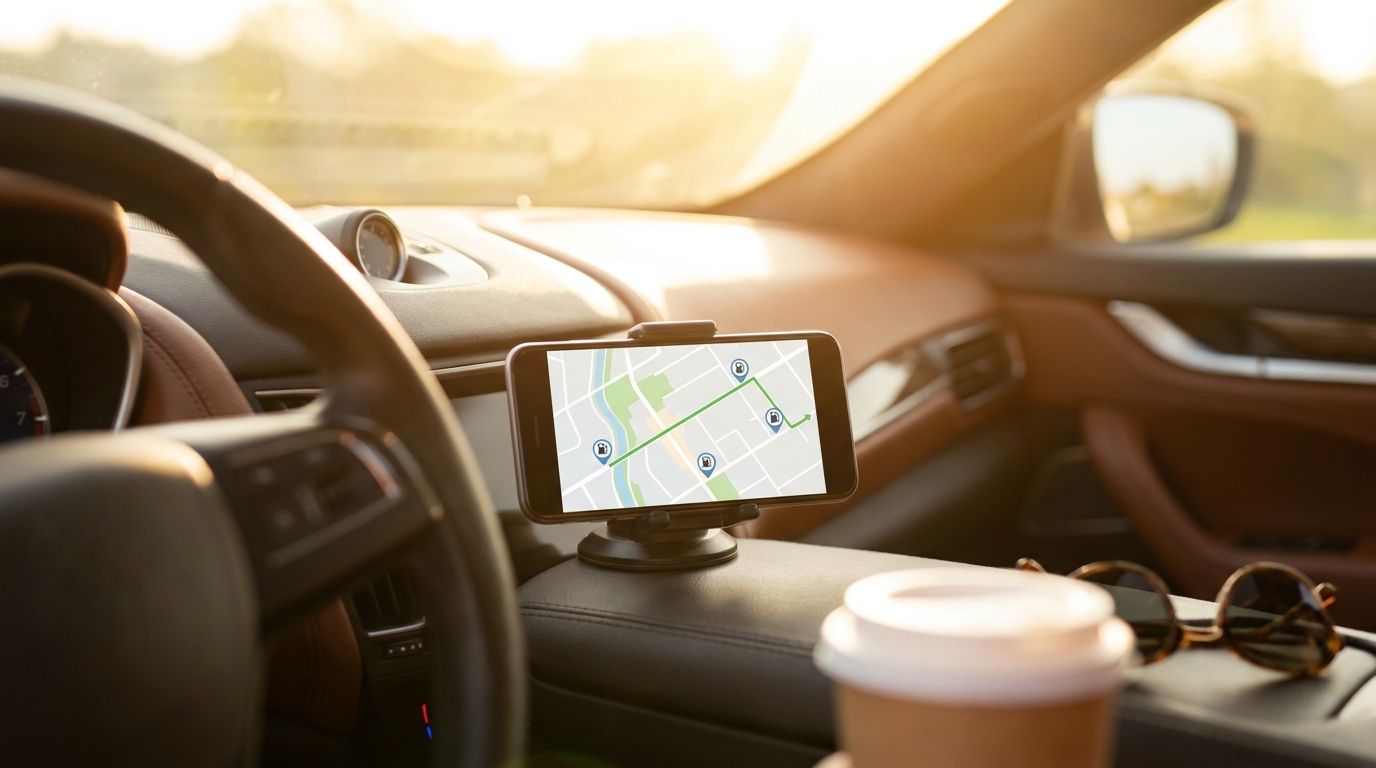
Waze is a navigation app first, but it quietly pulls gas-price data along your route and shows prices at stations ahead of you. It's not as comprehensive as GasBuddy for station-level searching, but for "I'm driving, cheap gas on my way, not off-route," Waze is the quickest answer.
Waze's gas feature works best on longer trips — the app can show you a rest-stop-radius gas price comparison several states from home. It's less useful for finding the absolute cheapest gas in your neighborhood.
Costco gas — not an app, but worth mentioning
Costco Wholesale sells gasoline at prices consistently $0.20 to $0.40 below the local average, for members. With national retail gas prices ranging from roughly $3.00 to $4.50 per gallon depending on region and season as of mid-2026, that spread is more meaningful than ever. This is actually the highest-impact "cheap gas" option for most commuters, and it requires no app — just a Costco card and a nearby location.
The trade-off is queue time (often 10 to 20 minutes at peak hours) and limited hours. For high-mileage drivers, the membership pays for itself on fuel alone in most of the country. For low-mileage drivers, the time cost of queuing can outweigh the price savings.
Apps to skip
Several small gas-price apps (Fuelly, GasGuru, AutoGuide) have good data but either draw from the same sources as GasBuddy or cover spottier geographies. Using more than one or two apps at once rarely finds meaningfully cheaper gas.
Any app that promises "discounts via QR code" but requires you to sign up through a specific affiliate link and funnel fuel purchases through a branded card is usually extracting more value from you than it returns. Stick to the top two or three with straightforward cash-back or transparent information.
The takeaway
The simple stack: GasBuddy installed for spotting cheap stations, Upside installed and checked before every fill-up for cash-back on top of that, Costco membership if you live near one and drive enough to make the queue worthwhile. Used consistently, these three save $250 to $600 a year for an average two-car household — the rare fuel-saving advice that costs nothing up front and pays back every single week.