Every time you start a cold engine, the first five to fifteen minutes of driving use dramatically more fuel than normal. The EPA estimates cold-start fuel economy is 12% worse than warm at 20°F above freezing, and up to 40% worse below freezing. Short-trip drivers often spend most of their driving life in this penalty zone.
Why cold engines are so inefficient
A cold engine has cold oil (which is thicker and harder to pump), cold cylinder walls (which cause more fuel to condense and flow past the rings), and a cold catalytic converter (which doesn't light off until the exhaust reaches about 400°F).
The engine management computer compensates by injecting extra fuel to keep combustion stable — this is why you see a slightly faster idle for the first minute or two. That enriched mixture is wasted fuel, not efficient combustion, and it's exiting the tailpipe largely unburnt.
The short-trip tax
This matters most for people whose trips are genuinely short. A two-mile run to school, a three-mile drive to the grocery store, a five-mile commute — these may never let the engine reach operating temperature (around 195°F).
A driver who makes five two-mile trips a day is effectively driving 100% of their miles on a cold engine. Their real-world MPG is often 20 to 30% below the car's EPA combined rating, and no amount of careful driving closes that gap. The only fix is combining trips.
Driving vs. idling is not close
The intuition "let it warm up at idle first" is backwards for fuel efficiency. An engine reaches operating temperature about twice as fast when driven gently than when idled. Idling warms the engine's combustion chambers slowly because there's almost no load to generate heat.
The AAA and EPA recommendation is consistent: after 30 seconds of idle (enough to circulate oil), start driving — gently — for the first few minutes. The engine will reach operating temp sooner, you'll burn less fuel, and you'll actually be getting somewhere.
Frost and safety are a different conversation
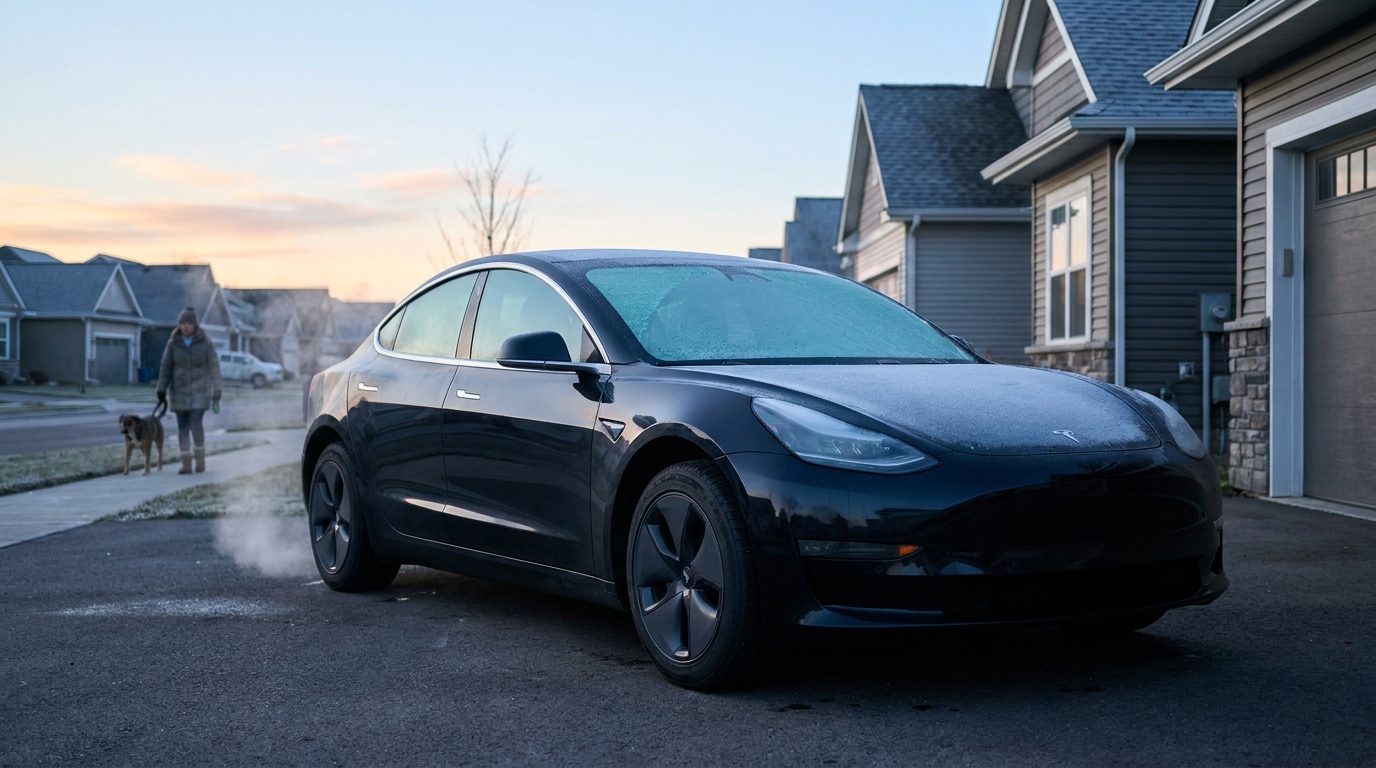
Defrosting the windshield with the defroster running is a safety requirement. Waiting until you can see clearly isn't optional. The tradeoff: run the defroster with the blower on high, and drive away as soon as the glass is clear — don't wait until the cabin is warm.
Remote-start and pre-heat systems blur the line here. If your car is plugged in and the heater is electric, pre-conditioning is essentially free. If it's a gas-powered remote start warming the car for fifteen minutes, you're pouring fuel into a stationary engine — typical cost $0.10 to $0.15 per start, or about $40 a year if you do it every cold morning.
Trip consolidation is underrated
Because cold-starts are so expensive, grouping errands matters more than most fuel-economy advice. Two cold-starts on a Saturday — one for groceries, one for a hardware store — cost roughly twice the fuel of one cold-start with two stops.
This is also why rideshare and delivery drivers often post unusually high real-world MPG: their engines run hot for hours at a time. The per-mile cold-start penalty is diluted across the whole shift. The lesson generalizes: fewer cold-starts, longer drives.
The takeaway
You can't eliminate cold-starts in a gasoline car, but you can minimize them. Drive gently instead of idling warm, group short errands into single trips, and — if frost isn't a factor — stop sitting in a parked car with the engine running. The first five minutes of every drive is the most expensive fuel you buy.