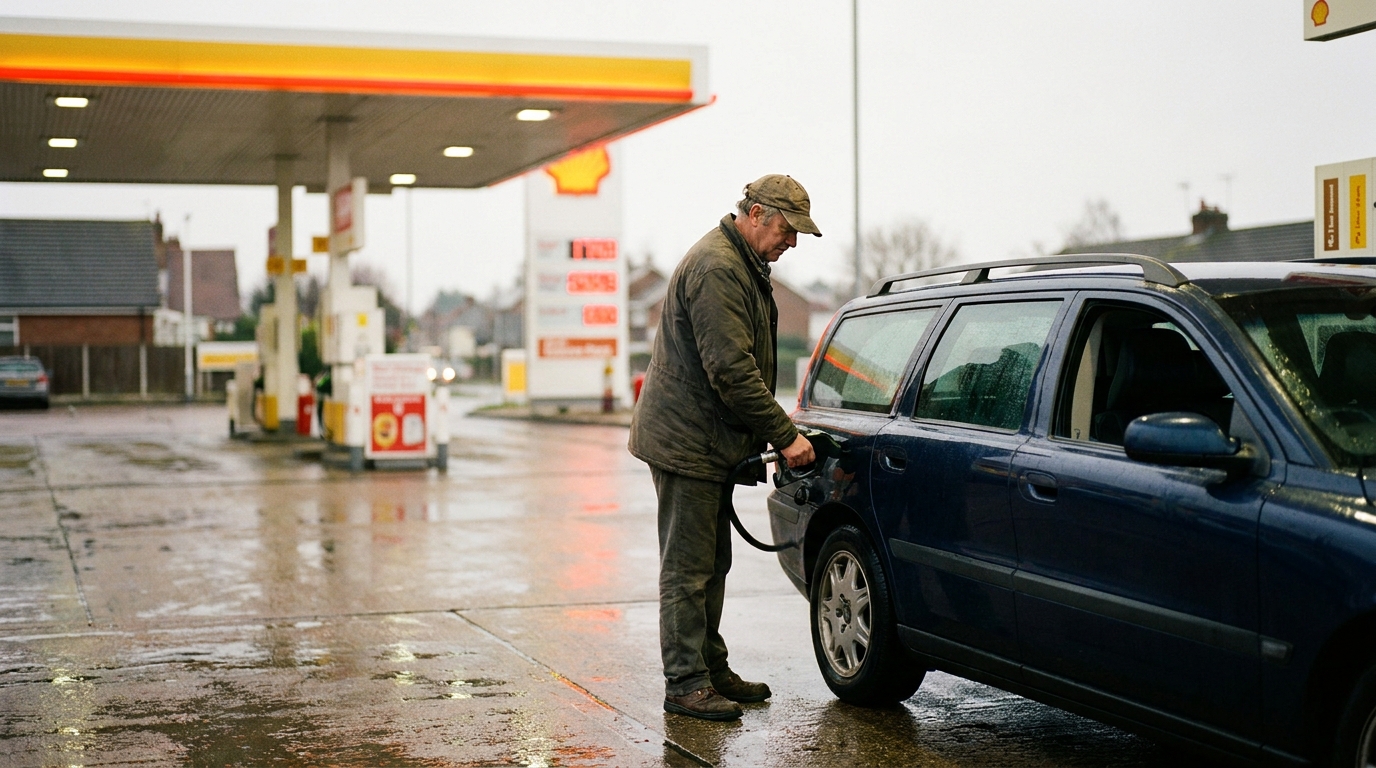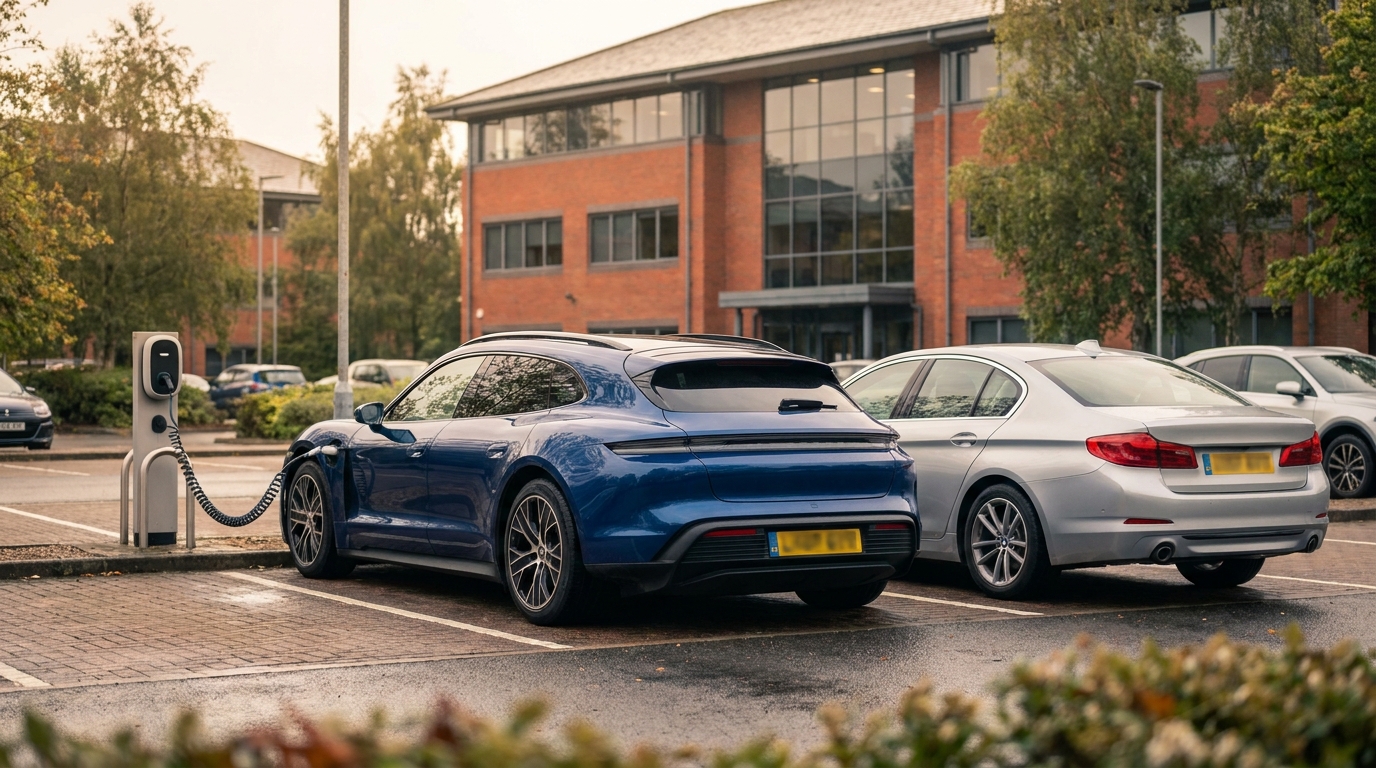
For anyone choosing a company car in the next 18 months, the tax treatment matters more than the sticker price. Benefit-in-kind (BiK) is the taxable value HMRC assigns to the private use of a company vehicle, and it is set to change in ways that narrow — but do not close — the gap between electric and petrol. The headline: EV rates climb from 2% to 3% in April 2025, 4% in 2026 and 5% in 2027. That sounds punishing until you compare it with the 25–37% bands petrol drivers already face.
How BiK actually works
BiK is calculated by taking the car's P11D value (list price plus options and delivery, minus first-year registration fee and road tax), multiplying by an appropriate percentage set by HMRC, then applying your marginal income tax rate. The appropriate percentage depends on CO2 emissions and, for plug-in hybrids, electric-only range. Fuel type also matters: diesels not certified to the RDE2 standard carry a 4-percentage-point surcharge.
For pure electric cars, the appropriate percentage has been held at 2% since 2022/23. HMRC confirmed at Autumn Statement 2022 that it would rise by one point each year from April 2025, reaching 5% in 2027/28 and 7% in 2028/29. Petrol and diesel bands, by contrast, sit between 25% and 37% for most fleet-relevant cars.
The practical effect is that a £45,000 EV and a £45,000 petrol saloon can generate wildly different tax bills for the same driver — often a four-figure annual gap, even after the EV bands start climbing.
The 2026 numbers side by side
Take a higher-rate taxpayer (40%) choosing between two £40,000 cars in the 2026/27 tax year. An electric model sits in the 4% band, giving a taxable benefit of £1,600 and an annual tax bill of £640. A petrol equivalent emitting around 140 g/km CO2 falls in the 34% band, producing a taxable benefit of £13,600 and a tax bill of £5,440.
That is a gap of roughly £4,800 a year — before you factor in fuel. Salary-sacrifice arrangements, common for EVs, push the effective saving higher still because the lease payment comes out of gross pay.
Even by 2028/29, when the EV rate hits 7%, the same £40,000 electric car would cost the driver £1,120 in tax. The petrol comparator would still be around £5,440 (bands are frozen in cash terms through 2027/28 under current OBR forecasts). The direction of travel narrows the gap but does not eliminate it.
What this means for driver choice
For anyone whose employer offers an EV via salary sacrifice, the tax case remains overwhelming through the rest of the decade. The AA and fleet trade bodies such as the BVRLA have both flagged that even with rising BiK, an electric company car is typically the cheapest way to drive a new vehicle in the UK.
The caveats matter, though. Home charging access is close to essential — public rapid charging at 70–85p/kWh can wipe out fuel savings versus a 55 MPG diesel. Residual values on some EVs have softened, which affects lease pricing. And employees taking cash allowances rather than a car see none of the BiK advantage.
For plug-in hybrids, the picture is messier. New WLTP testing from April 2025 will cut the electric-range figures used for BiK, pushing many PHEVs into higher bands. Anyone considering a PHEV as a tax play should model the post-2025 percentages carefully.
The bigger picture: fuel duty and running costs
BiK is only one line in the total-cost calculation. Fuel duty has been frozen at 52.95p/L since March 2022, with the 5p cut extended repeatedly — the OBR continues to assume it will eventually be reinstated, which would add roughly 6p/L at the pump. DESNZ weekly figures put average UK petrol around 135p/L and diesel around 142p/L in late 2024.
Electricity costs at home, on a dedicated EV tariff of 7–10p/kWh overnight, work out to roughly 2–3p per mile. Petrol at 40 MPG works out closer to 15p per mile. Over 12,000 miles a year that is a £1,400 difference before tax is even considered.
Servicing, VED and insurance vary less predictably. But the combined effect of low BiK, cheap overnight electricity and salary sacrifice means the electric option wins the arithmetic for most higher-rate taxpayers, even accounting for the 2026 changes.
The takeaway
The 2026 BiK increase is real but modest in absolute terms — a few hundred pounds a year for most drivers. It does not change the fundamental picture: for higher-rate taxpayers with access to salary sacrifice and home charging, an electric company car remains dramatically cheaper than a petrol equivalent. Model the numbers using your own P11D value, marginal tax rate and expected mileage rather than relying on scheme brochures, and factor in the OBR's assumption that the 5p fuel duty cut will not last forever.