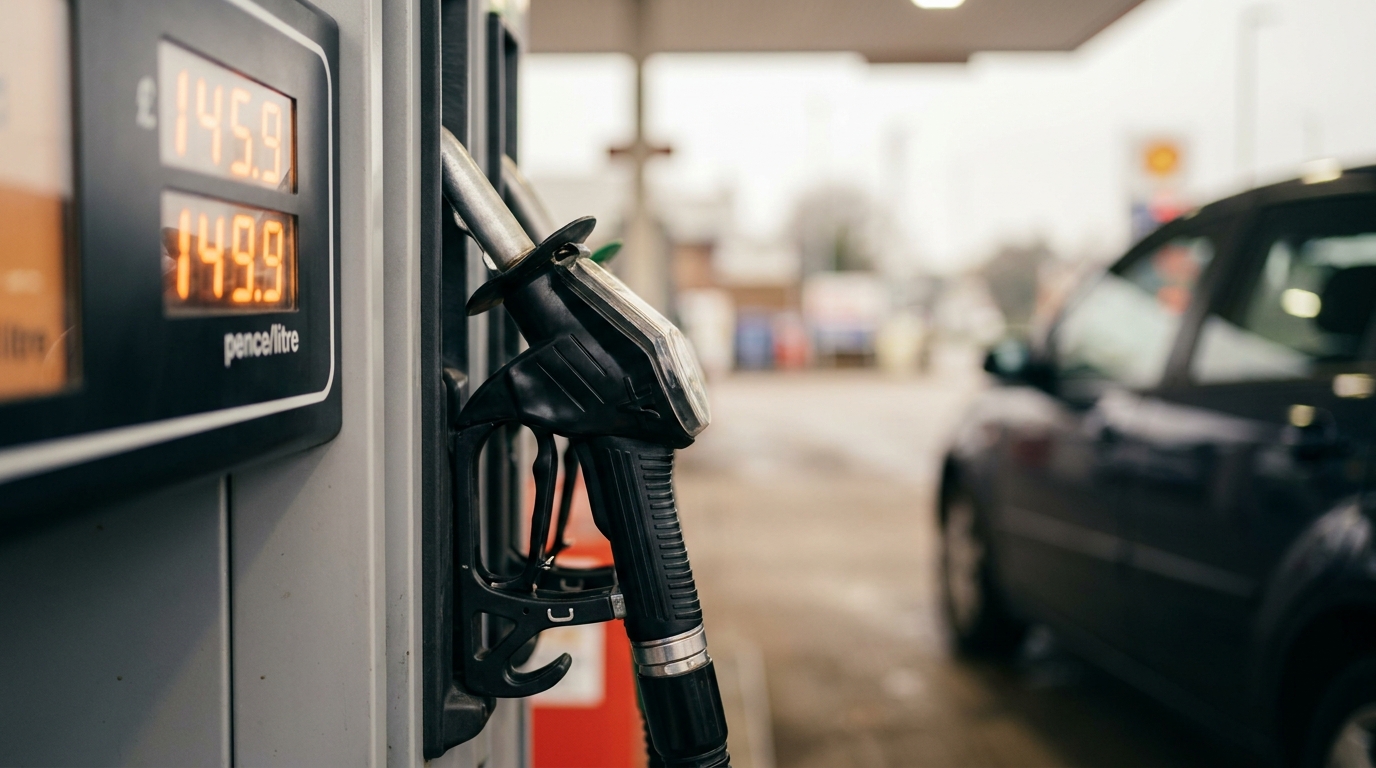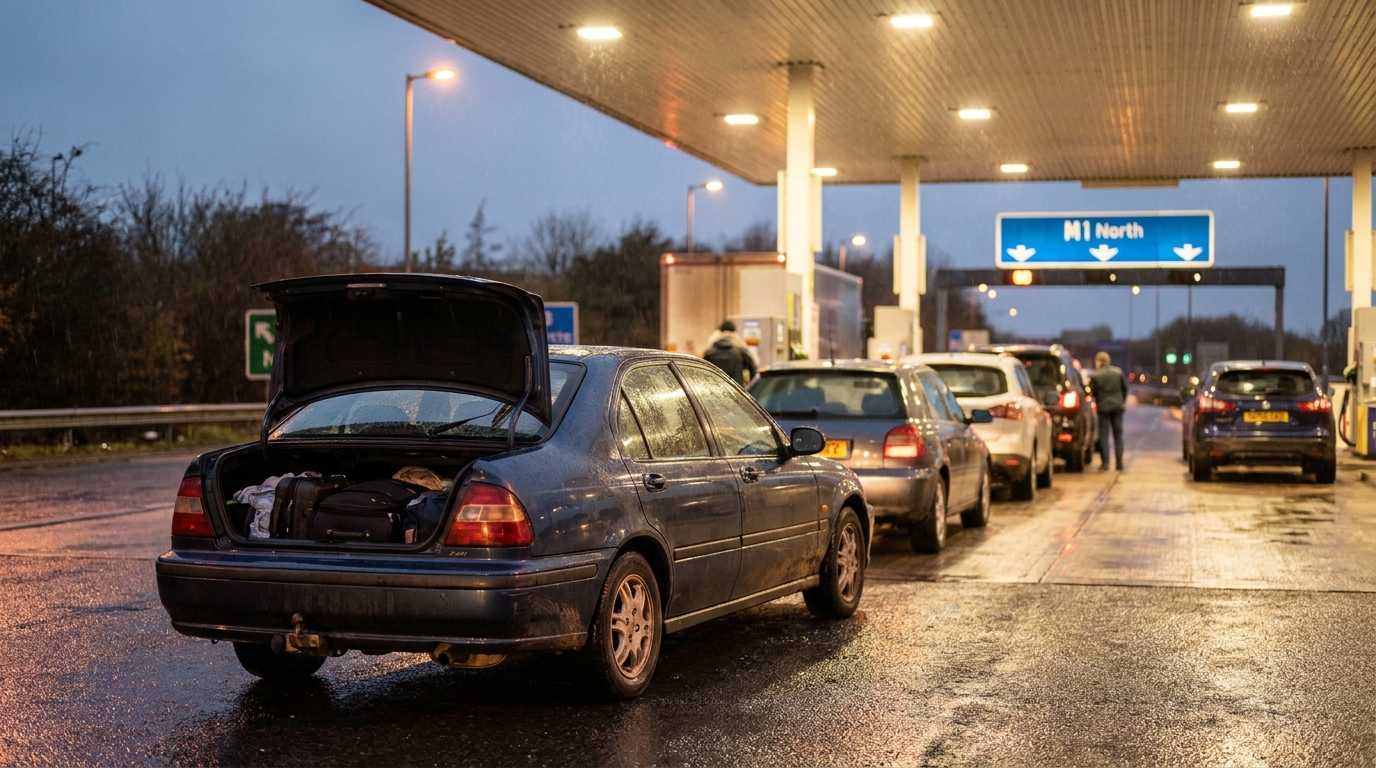
Anyone who has filled up at a motorway service area knows the price board tends to raise an eyebrow. The question is how much of a premium you are actually paying — and whether topping up a few miles earlier is worth the detour. Using Department for Energy Security and Net Zero (DESNZ) weekly road fuel figures, plus the regular motorway price surveys published by the RAC and the AA, we can put a reasonable number on the gap and work out when it matters.
What the surveys actually show
The RAC's Fuel Watch and the AA's monthly Fuel Price Report both track motorway forecourts separately from the national average. Across 2023 and 2024, both consistently reported that petrol at motorway services sat roughly 18–25p per litre above the UK average, with diesel often a little higher still. In cash terms, that is £9–£13 extra on a typical 50-litre fill.
The DESNZ weekly series does not break out motorway sites, but it provides the reliable baseline figure that the campaigning groups benchmark against. When the UK average petrol price is around 135p/L, it is unremarkable to see 155–165p/L on a service-area pole sign. During the 2022 price spike, the gap briefly widened past 30p/L on some sites, which is what prompted the Competition and Markets Authority to open its wider road fuel market study.
The gap is not uniform. Independent operators and smaller services sometimes undercut the big three (Moto, Welcome Break and Roadchef), and Shell or BP-branded forecourts on the same site can price differently from each other within pence.
Why motorway fuel costs more
Operators point to higher rents, 24-hour staffing, and the cost of running large sites with HGV lanes, AdBlue and increasingly rapid EV charging. There is some truth to this: concession fees paid to the site operator are a real cost that a supermarket forecourt simply does not carry.
The bigger factor, though, is captive demand. A driver who is 40 miles into a journey with the fuel light on is not price-shopping. The CMA's 2023 road fuel update noted that competition is weakest where drivers have the fewest alternatives, and motorway services are the clearest example of that dynamic in the UK market.
Diesel tends to carry a slightly larger premium than petrol at services, partly because HGVs and vans fuel there in volume and partly because diesel margins have been structurally wider since 2022, as both the RAC and the CMA have highlighted.
A simple rule of thumb
Assume motorway fuel will cost you an extra 20p per litre versus a nearby supermarket. On a 50-litre fill that is £10; on a van tank of 80 litres it is £16. If leaving the motorway adds less than 10 minutes and under 6 miles round trip, you are almost certainly better off doing so.
If you regularly use the same route, keep a short mental list of two or three reliable forecourts a mile or two off key junctions. Our own junction guides and the AA's route planner both flag these. The savings compound quickly for anyone doing 15,000 miles a year or more.
The takeaway
Motorway services charge a predictable premium of roughly 18–25p per litre, confirmed consistently by the RAC and AA against the DESNZ national average. That is £10 or so on a typical fill — enough to justify a short detour in almost every case, but not worth risking an empty tank or an unsafe stop. Treat motorway forecourts as the emergency option they effectively are, plan one supermarket stop into longer journeys, and the annual saving will comfortably run into three figures for most households.