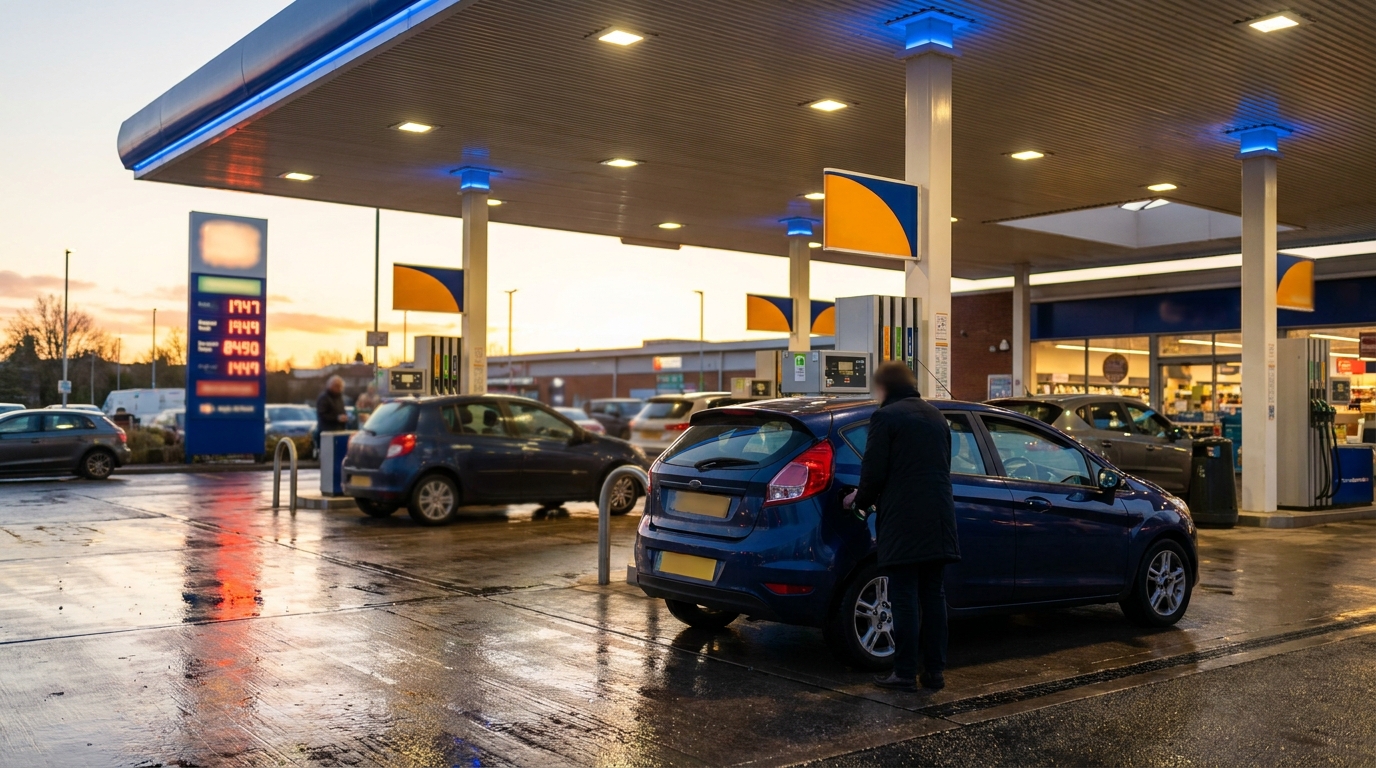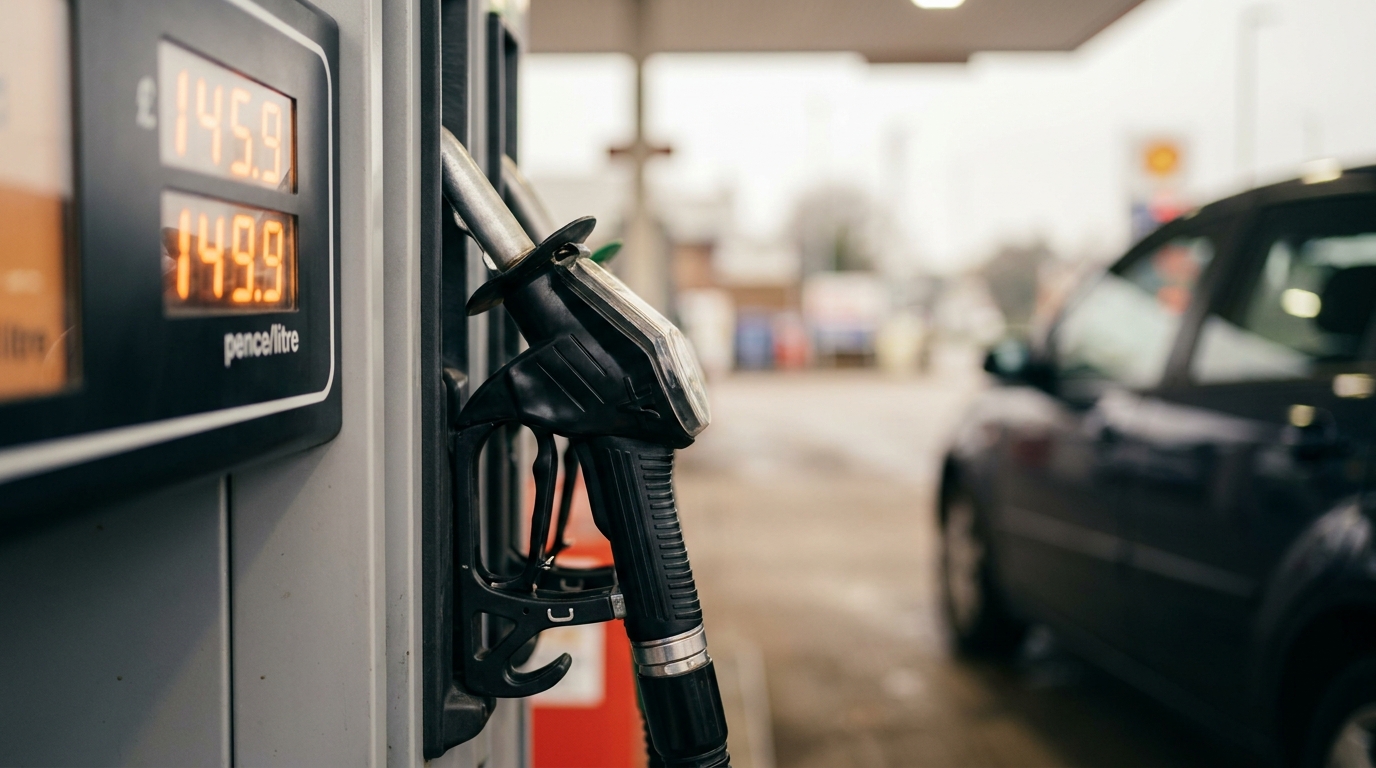
If you filled up this week at around 145p a litre, you probably assumed the oil majors were taking the lion's share. They are not. Based on the latest DESNZ weekly road fuel price series, the AA's monthly Fuel Price Report and HMRC duty rates, roughly 80p of every litre of petrol in 2026 goes to the Treasury before anyone has refined, shipped or sold it. The remaining 65p covers the actual commodity, the forecourt and the biodiesel blend. Here is how the pennies split, and where the pressure points sit.
The headline split at 145p a litre
Fuel duty on unleaded petrol remains frozen at 52.95p per litre into 2026, after the Chancellor extended the temporary 5p cut yet again in the latest Budget. VAT is charged at 20% on the total pump price including duty, which at 145p works out to about 24.2p a litre. Together, that is 77.1p of pure tax before a drop of petrol has been bought on the wholesale market.
That leaves roughly 68p to cover the crude oil itself, refining, distribution, the biofuel blend mandated under the Renewable Transport Fuel Obligation, and the retailer's gross margin. The split between those elements shifts week to week with the Brent oil price and the sterling-dollar rate, but the tax wedge barely moves.
The RAC's Fuel Watch has made the same point repeatedly: when wholesale costs fall, pump prices tend to drift down slowly; when they rise, forecourts pass it through quickly. That asymmetry is where most consumer frustration lives, not in the duty line.
Crude, refining and the biofuel blend
Crude oil is the smallest moving part most drivers can name but the one they overestimate most. At a Brent price around $80 a barrel and sterling near $1.27, the crude content of a litre of petrol works out at roughly 32–34p. Refining margins add another 8–12p depending on European capacity and seasonal demand, and distribution — pipelines, terminals, tankers — adds about 2p.
The RTFO requires suppliers to blend renewable fuel into petrol and diesel, which is why E10 petrol now contains up to 10% bioethanol. The bio component is typically more expensive per litre than fossil petrol, and the compliance cost sits inside the wholesale price. DESNZ estimates this adds a low single-digit pence per litre on average.
None of these inputs are set in London. A weaker pound or a cold snap in US refining capacity feeds through to UK pumps within a fortnight, which is why the AA tracks wholesale prices daily rather than monthly.
Retailer margin: smaller than you think, bigger than it was
The Competition and Markets Authority's 2023 road fuel market study found that supermarket fuel margins had roughly doubled since 2019, from about 4p a litre to 8p. The CMA's ongoing monitoring in 2024 and 2025 showed margins remained elevated versus the pre-pandemic baseline, prompting the proposed Pumpwatch open-data scheme.
At 145p a litre in 2026, the typical retailer gross margin sits around 8–10p, with motorway service stations materially higher and independent rural forecourts often lower in cash terms but higher as a percentage. Out of that margin the retailer pays staff, card fees (around 1p a litre), rent and shrinkage, so net profit per litre is usually a couple of pence at most.
The point the CMA keeps making is not that any single retailer is gouging, but that competition has weakened at the local level. A supermarket that used to undercut by 5p now undercuts by 2p.
What this means for the driver
Because 77p of the 145p is fixed by Westminster, campaigns to lean on retailers can only ever shave a few pence. The real swing factor for household fuel bills is the frozen duty itself: the OBR has repeatedly flagged that successive freezes since 2011 have cost the Treasury tens of billions, and any future government unfreezing duty would add roughly 7p a litre overnight once the 5p cut is reversed and inflation uprating resumes.
For now, the practical levers are the ones drivers already know: use the supermarket price map on the AA or PetrolPrices app, avoid motorway forecourts for routine refills, keep tyres at the correct pressure, and lift off earlier. None of these change the tax share, but they stretch the 68p of actual fuel further.
Diesel follows the same structure with slightly different numbers — duty is identical at 52.95p, but wholesale diesel has traded at a premium to petrol since 2022, which is why diesel pumps have stubbornly stayed 6–8p above unleaded.
The takeaway
At 145p a litre, roughly 77p is tax, 44p is crude and refining, 14p is distribution and biofuel blending, and 10p is the forecourt. The headline you keep seeing — that the oil companies or supermarkets are pocketing it — doesn't survive contact with the DESNZ breakdown. Duty policy and the sterling oil price do most of the work. Shop around for the retailer margin, but don't expect miracles from a slice that is already under 10p.