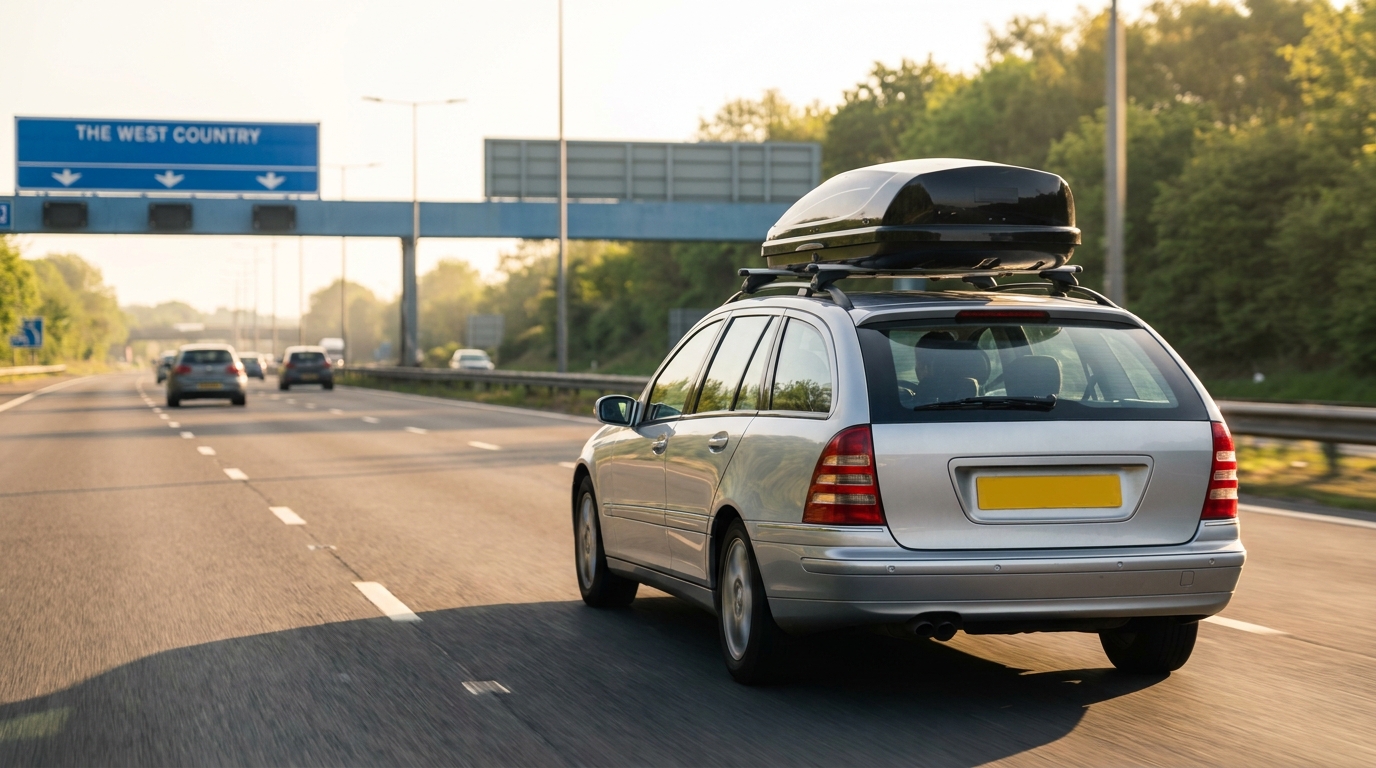
Every July, thousands of UK families bolt a plastic box to the roof and set off for Cornwall, the Lakes or the ferry at Dover. The box swallows the wetsuits and the travel cot, which is the point. What it also swallows is fuel — sometimes a surprising amount of it. With pump prices tracked weekly by DESNZ still hovering well above pre-2021 norms, the question is a fair one: how much does that box actually cost you over a return holiday trip, and is there a cheaper way to pack?
Why a roof box hits MPG so hard
At urban speeds, aerodynamic drag is a minor player. Above roughly 50 mph it becomes the dominant force your engine is fighting, and drag rises with the square of speed. A roof box sits in the dirtiest part of the airflow — right where the car has already done the work of parting the air — and adds both frontal area and turbulence behind it.
Manufacturers such as Thule and Halfords quote independent wind-tunnel figures suggesting a modern, teardrop-shaped box adds somewhere between 10% and 25% to motorway fuel consumption, depending on the vehicle and the box. Older, boxier designs and cheap universal fit models can push that higher. An empty roof rack alone typically costs 5–10%.
Crucially, the penalty is almost entirely a motorway problem. On a 30 mph school run you would struggle to measure it. On a 70 mph run down the M5, it is unmissable.
The Cornwall run: doing the sums
Take a realistic example: a family petrol SUV that returns 45 MPG on a steady motorway cruise. The round trip from Birmingham to Newquay and back is roughly 550 miles. At UK average petrol prices in the 135–140 p/L range recently reported by the AA and RAC Fuel Watch, that baseline journey costs around £75 in fuel.
Fit a roof box and assume a middle-of-the-road 15% MPG penalty. Economy drops to about 38 MPG, and the same trip now costs closer to £88 — an extra £13 for the return leg. Push the penalty to 20% (a bulkier box, a headwind, a roof bike carrier alongside) and you are looking at nearer £18 extra.
Diesel drivers fare slightly better in percentage terms because their baseline economy is higher, but the pump price gap has narrowed. Electric drivers pay in range, not pounds: expect a 15–20% range hit on the motorway, which can turn a one-stop trip into a two-stop trip.
When the box still makes sense
Thirteen pounds is not a catastrophe on a £600 holiday. The real question is whether you actually need the extra volume. If the alternative is taking two cars, the roof box wins on fuel by a mile. If it is the difference between a comfortable drive and a boot packed to the parcel shelf blocking rear visibility, that is a safety argument the DVSA would recognise.
But if the box is on the roof from May to September "just in case", the cost quietly adds up. A daily 20-mile commute at 60 mph with an empty box fitted could cost an extra £70–£100 over a summer.
The practical rule: fit it the day before you leave, take it off the day you get back.
Cutting the penalty without ditching the box
You cannot repeal physics, but you can soften the blow. Speed is the single biggest lever — dropping from 75 mph to 65 mph on a loaded motorway run typically claws back 10–15% of fuel use on its own, roof box or not.
A few other habits worth adopting on holiday drives:
The bottom line
For most UK families making one or two long trips a year, a roof box costs £10–£25 per return journey in extra fuel. That is real money, but it is not the deal-breaker some drivers assume. The bigger, avoidable cost is leaving the box on the roof between trips, or choosing a cheap boxy design over a modern low-profile one.
Weigh it against the alternatives — a trailer, a bigger hire car for the week, or simply packing less — and the roof box usually comes out reasonable. Just take it off when you get home.
The takeaway
A roof box is not free, but it is not ruinous either. Budget an extra 10–20% on your motorway fuel bill while it is fitted, drop your cruising speed by 5–10 mph to offset most of it, and remove the box the moment the holiday ends. Do that, and the penalty on a typical UK family trip is in the £10–£20 range — a small price for not having a suitcase in the footwell.